What Is an Available Balance vs. a Current Balance?
Why your bank shows two balances, how pending transactions and holds affect them, and how to avoid spending money that is already committed...
Reviewed by Marco Moreno, Underwriter & Operations Manager · October 2026
Your bank may show two different balances for the same checking account. Understanding the difference helps avoid spending money that is already committed.
Understand current balance
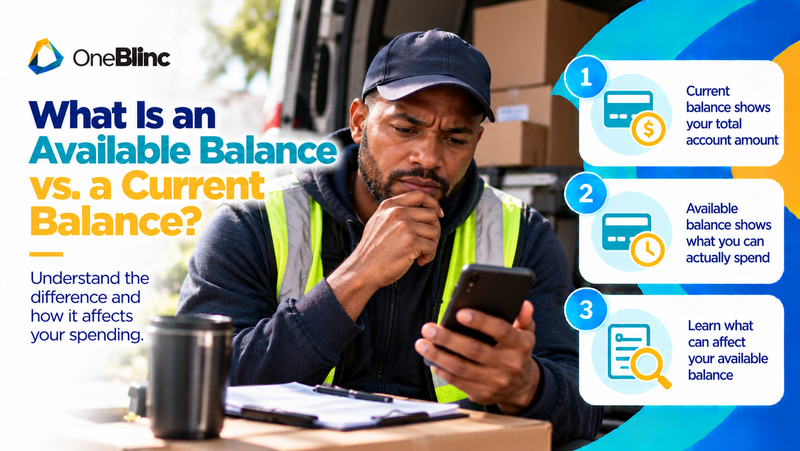
The current or posted balance generally reflects transactions that have completed processing.
Understand available balance
Available balance generally accounts for certain pending holds or authorizations, but it may not include every upcoming payment.
Watch for merchant holds
Hotels, gas stations, and some other merchants may authorize amounts that differ from the final charge.
Track scheduled payments separately
Rent, subscriptions, and checks may not appear immediately. Maintain your own list of upcoming debits.
Use alerts and a buffer
Low-balance alerts and a small cushion can help, but they are not substitutes for checking the account before spending.
A simple example
Imagine your current balance shows $500. Yesterday you bought gas, and the station placed a $100 hold that has not posted yet. Your available balance might show $400. You also scheduled a $150 phone bill payment for tomorrow, which does not appear in either number. If you spend based on the $500 current balance, you could overdraw your account. If you spend based on the $400 available balance, you still might not account for the phone bill. The safest spending number is closer to $250: your available balance minus upcoming payments you know about.
Why pending transactions change
A pending transaction is an authorization that has not yet fully processed. The final amount can differ from the pending amount. Restaurants may authorize the bill before you add a tip, so the final charge is higher. Gas stations and hotels may place a temporary hold that is larger or smaller than the final purchase. Online orders may authorize when you buy but post when items ship. Usually, pending transactions settle within a few business days, but timing depends on the merchant and your bank.
How deposits affect your available balance
Deposits do not always become available immediately. Direct deposits from employers are often available quickly, sometimes even before the official payday. Mobile check deposits and checks deposited at a branch may be subject to holds, particularly for large amounts or new accounts. Your bank's funds availability policy explains when deposited money can be used. Knowing that schedule helps you avoid spending money that has not cleared.
Build your own running balance
Many people find it helpful to keep a simple running balance outside their banking app, either in a notebook, spreadsheet, or budgeting tool. Start with your available balance, subtract any scheduled payments and checks you have written, and add only deposits that are confirmed. Updating it a few times a week gives you a clearer picture than relying on either balance alone.
Habits that help
Turn on alerts for low balances and large transactions.
Review pending transactions before making a large purchase.
Keep a small cushion in checking to absorb timing differences.
Check your account the day before automatic payments are due.
Ledger balance and other terms you might see
Banks use different names for similar ideas. Some call the current balance the ledger balance or posted balance. Others show a projected balance that includes scheduled transfers. Credit unions may use terms like actual balance. If your app shows a number you do not recognize, tap on it or check the bank's help page for a definition. Knowing exactly what each number includes, and what it leaves out, is the key to using it correctly. When in doubt, call customer service and ask which balance reflects money you can safely spend today without triggering a fee.
Related OneBlinc guides
Explore OneBlinc
If a paycheck timing gap is part of your situation, download OneBlinc to explore BlincAdvance™ and check current eligibility and terms. OneBlinc offers a subscription service starting at $8.99 per month, a free standard deposit option, and an optional instant deposit for an additional fee. Available advance amounts depend on eligibility and applicable terms. Only use an advance when you have a clear repayment plan.
Educational content only; not individualized financial, legal, tax, or medical advice. Eligibility rules apply.
Frequently Asked Questions
Which balance should I use to decide what to spend?
Start with the available balance, then subtract scheduled transactions not yet reflected.
Why did my balance change overnight?
A pending transaction may have posted, a hold may have changed, or a scheduled payment may have cleared.
How long do pending transactions usually take to post?
Often one to a few business days, though timing varies by merchant, transaction type, and bank.
OneBlinc Editorial Team
The OneBlinc Editorial Team writes practical guides on budgeting, paychecks, saving, and handling financial emergencies. Every article is researched, edited for accuracy, and updated when rules or products change. Our content is educational and is not individualized financial advice.
OneBlinc Blog
OneBlinc helps eligible workers manage paycheck timing with BlincAdvance™. Eligibility and terms apply.
Visit SiteDon't miss an update!
Subscribe to get our fresh news!