Unexpected Bill? Smart Steps to Take
What to do when an unexpected bill arrives: confirm the amount, check the due date, ask about payment options and protect essential expenses...
Reviewed by Ashley Anderson, Support Operations & AI Automation Specialist · October 2026
An unexpected bill can make an ordinary week feel urgent. Before reaching for a funding option, take a few minutes to verify the charge and assess what really needs to happen next.
Confirm the bill is accurate
Review the provider, service date, amount, and due date. For medical or utility bills, request an itemized explanation if something does not look right.
Rank the consequences of delay
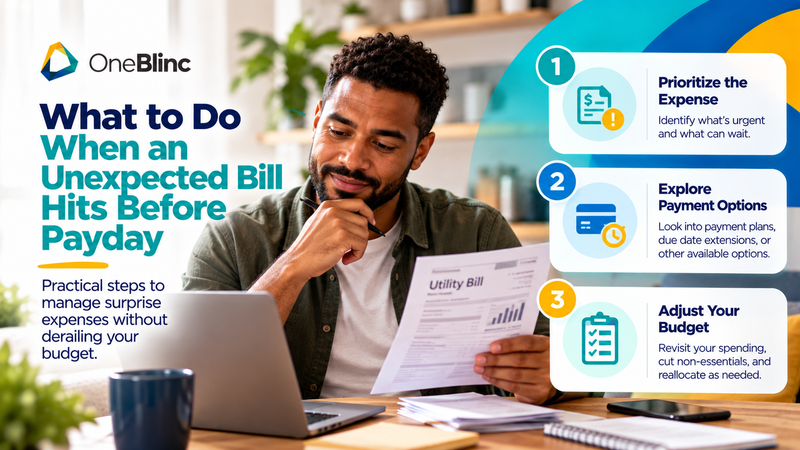
Prioritize essential housing, utilities, transportation to work, and health-related needs. A bill with a negotiable due date may be less urgent than one affecting a basic necessity.
Ask for a payment arrangement
Contact the provider before the deadline. Ask about extensions, installment plans, hardship programs, or fee waivers. Get any agreement in writing.
Look for available assistance
Depending on the expense and location, nonprofit organizations, community programs, or government benefits may help. Verify eligibility through official sources.
Choose a funding option carefully
If you still face a shortfall, compare the total cost, repayment date, and impact on the next paycheck of any advance or borrowing product.
A practical example
For a surprise $180 utility adjustment, first request a bill review and ask whether the amount can be spread across future payments. That may solve the problem without an additional financial product.
Unexpected bill checklist
Verify the amount, provider, service date, and due date.
Request an itemized statement if anything looks wrong.
Call before the deadline to ask about extensions or payment plans.
Get any agreement in writing and add the new due date to your calendar.
Different bills, different strategies
Not every unexpected bill should be handled the same way. The type of bill often determines your best options.
Medical bills
Ask for an itemized statement, confirm insurance processed the claim correctly, and ask whether financial assistance is available. Medical providers frequently offer payment plans.
Utility bills
A sudden spike may come from an estimated reading, a rate change, or a billing error. Ask the utility to verify the meter reading and whether budget billing or hardship programs are available.
Vet bills
Ask for an estimate before treatment, discuss which procedures are urgent, and ask about payment arrangements. Some communities have low-cost clinics or assistance programs for pet care.
Home or appliance repairs
Get more than one quote when possible, check whether a warranty applies, and ask whether a temporary fix can safely buy time.
Protect yourself from scams
Some unexpected bills are not real. Scammers may send fake invoices or call claiming you owe money and must pay immediately to avoid shutoff or legal action. Be cautious of urgent demands, requests for payment by gift card or wire transfer, and callers who will not provide written details. Contact the company directly using a phone number from an official bill or website, not one provided in the suspicious message.
Plan for the next surprise
Once the immediate bill is handled, look at whether this type of expense might happen again. Car registration, annual subscriptions, and seasonal utility increases are predictable even if they feel sudden. Setting aside a small amount for these costs over the year can turn a future emergency into a planned expense. For truly unpredictable costs, a starter emergency fund, even a few hundred dollars, can give you more options and less stress the next time something comes up.
Related OneBlinc guides
Explore OneBlinc
If a paycheck timing gap is part of your situation, download OneBlinc to explore BlincAdvance™ and check current eligibility and terms. OneBlinc offers a subscription service starting at $8.99 per month, a free standard deposit option, and an optional instant deposit for an additional fee. Available advance amounts depend on eligibility and applicable terms. Only use an advance when you have a clear repayment plan.
Educational content only; not individualized financial, legal, tax, or medical advice. Eligibility rules apply.
Frequently Asked Questions
Can I negotiate an unexpected bill?
Often it is worth asking, especially before the payment is overdue. Policies vary by provider.
What should I do after paying it?
Add the expense type to your budget and consider a small sinking fund if it could recur.
What if I cannot reach the provider before the due date?
Keep a record of your attempts, continue following up through official channels, and ask about options as soon as you get through.
OneBlinc Editorial Team
The OneBlinc Editorial Team writes practical guides on budgeting, paychecks, saving, and handling financial emergencies. Every article is researched, edited for accuracy, and updated when rules or products change. Our content is educational and is not individualized financial advice.
OneBlinc Blog
OneBlinc helps eligible workers manage paycheck timing with BlincAdvance™. Eligibility and terms apply.
Visit SiteDon't miss an update!
Subscribe to get our fresh news!