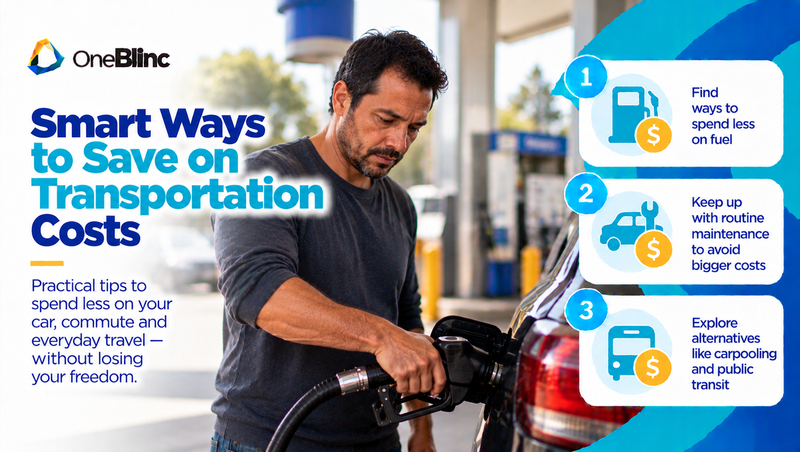
Smart Ways to Save on Transportation Costs
Lower what you spend getting around: know your true cost per mile, use fuel efficiently, stay on top of maintenance and compare commute options...
Reviewed by Ashley Anderson, Support Operations & AI Automation Specialist · October 2026
Getting to work, school, and medical appointments is essential for many households. Transportation savings should protect safety and reliability while reducing avoidable costs.
Know your actual monthly transportation cost
Add fuel, insurance, loan or lease payments, parking, tolls, maintenance, and transit fares. Drivers should include occasional repairs and registration fees, not only the amount spent at the pump.
Use fuel more efficiently
Combine nearby errands, avoid unnecessary idling where safe and practical, and keep tires inflated to the vehicle manufacturer's recommended pressure. Compare gas prices along your usual route rather than making a long detour for a small difference.
Stay ahead of routine maintenance
Follow the manufacturer's service schedule and address safety issues promptly. Delaying necessary repairs can increase future costs or create risk. Ask for an itemized estimate and compare reputable repair shops when the work is not urgent.
Compare commute alternatives
Carpooling, employer transit benefits, public transportation, or adjusting travel times may help, depending on shift schedules and local service. Consider time, accessibility, safety, and childcare obligations alongside price.
Review insurance thoughtfully
Shop comparable coverage and deductibles at renewal. A cheaper premium may come with higher out-of-pocket exposure. Avoid reducing legally required or essential protection just to lower a bill.
Example: fuel savings
If a household spends $45 per week on gas, a sustainable 10% reduction would save about $4.50 per week, or $234 over a year. Actual savings depend on driving patterns and fuel prices.
Calculate your true cost per mile
Knowing what each mile costs you makes transportation decisions much clearer. Add up a year of vehicle costs, including fuel, insurance, maintenance, repairs, registration, parking, and loan or lease payments. Divide that total by the number of miles you drove. If you spend $6,000 a year and drive 10,000 miles, your cost is about 60 cents per mile. With that number in mind, a 20-mile round trip to a store across town costs about $12, which may change whether that trip is worth it for a small sale.
Transportation options beyond driving alone
Carpooling and ride-sharing with coworkers
Sharing rides even a few days a week can split fuel and parking costs. Agree in advance on how costs and driving days will be divided.
Biking and walking
For short trips, biking or walking can eliminate fuel costs entirely and provide exercise. Consider safety, weather, and secure storage for a bike.
Public transit passes
Monthly or weekly passes are often cheaper than paying per ride if you commute regularly. Some cities offer reduced fares for eligible riders.
Employer commuter benefits
Some employers allow you to pay for transit or qualified parking with pre-tax income, or offer subsidies. Ask HR what is available.
Should you keep a second car?
Households with more than one vehicle sometimes find that a second car is used only occasionally. Insurance, registration, and maintenance continue whether the car is driven or not. If a second vehicle sits most of the week, compare its annual cost with the cost of occasional rideshares, rentals, or transit. For some families, selling it could free up both cash and monthly expenses. For others, the flexibility is essential. Running the numbers helps you decide with confidence.
Plan around the expensive months
Transportation costs are not always steady. Registration renewals, insurance premiums, and seasonal maintenance like winter tires can create spikes. Setting aside a small amount each month in a transportation sinking fund makes those months easier to handle.
Driving habits that affect fuel use
How you drive can influence how often you fill up. Smooth, gradual acceleration generally uses less fuel than quick starts and hard braking. Removing unnecessary weight from your trunk and taking off roof racks when you are not using them can reduce drag. On the highway, steady speeds tend to be more efficient than frequent speeding up and slowing down. The exact savings depend on your vehicle and conditions, but these habits also reduce wear on brakes and tires, which can lower maintenance costs over time.
Ask the right questions at the shop
Request a written, itemized estimate. Ask which repairs are urgent, which can safely wait, whether diagnostic fees apply, and what warranties cover. For expensive nonemergency work, a second opinion can help.
DIY maintenance that is usually safe to learn
Some basic maintenance tasks are manageable for many drivers and can save labor costs. Always follow your owner's manual and stop if you are unsure.
Checking and topping off windshield washer fluid.
Replacing windshield wiper blades.
Checking tire pressure and tread depth.
Replacing the engine air filter or cabin air filter on many models.
Checking oil level and looking for leaks.
Leave brake work, electrical systems, airbags, and anything involving lifting the vehicle to qualified professionals unless you have proper training and equipment.
Decide when repair versus replacement makes sense
Compare the repair cost, expected reliability afterward, vehicle value, and the cost of another dependable car. A single large repair does not automatically mean replacing the vehicle is cheaper.
Should you refinance your auto loan?
If interest rates have dropped or your credit has improved since you bought your car, refinancing might lower your monthly payment or total interest. Compare the new rate, the loan term, and any fees. Be careful about extending the loan term significantly, since a longer loan can mean paying more interest overall and owing more than the car is worth. A shorter or similar term at a lower rate is generally the strongest refinancing outcome.
Explore OneBlinc
If a paycheck timing gap is part of your situation, download OneBlinc to explore BlincAdvance™ and check current eligibility and terms. OneBlinc offers a subscription service starting at $8.99 per month, a free standard deposit option, and an optional instant deposit for an additional fee. Available advance amounts depend on eligibility and applicable terms. Only use an advance when you have a clear repayment plan.
Educational content only; not individualized financial, legal, tax, or medical advice. Eligibility rules apply.
Frequently Asked Questions
Is driving less always the best option?
Not necessarily. Shift work, disability, family schedules, and transit availability can make driving essential.
Should I postpone maintenance to save money?
Do not postpone safety-critical maintenance. Compare estimates and prioritize necessary work.
Do employers offer transportation benefits?
Some employers offer commuter or transit benefits. Ask your HR or payroll team what is available and how it works.
OneBlinc Editorial Team
The OneBlinc Editorial Team writes practical guides on budgeting, paychecks, saving, and handling financial emergencies. Every article is researched, edited for accuracy, and updated when rules or products change. Our content is educational and is not individualized financial advice.
OneBlinc Blog
OneBlinc helps eligible workers manage paycheck timing with BlincAdvance™. Eligibility and terms apply.
Visit SiteDon't miss an update!
Subscribe to get our fresh news!