Smart Grocery Shopping: How to Save Money
Save on groceries: plan meals around what you have, compare unit prices, use promotions strategically and track food waste as well as receipts...
Reviewed by Ashley Anderson, Support Operations & AI Automation Specialist · October 2026
Food is essential, but grocery spending can change dramatically from one shopping trip to the next. A few repeatable habits can help reduce waste without requiring an unrealistic meal plan.
Plan meals around what you already have
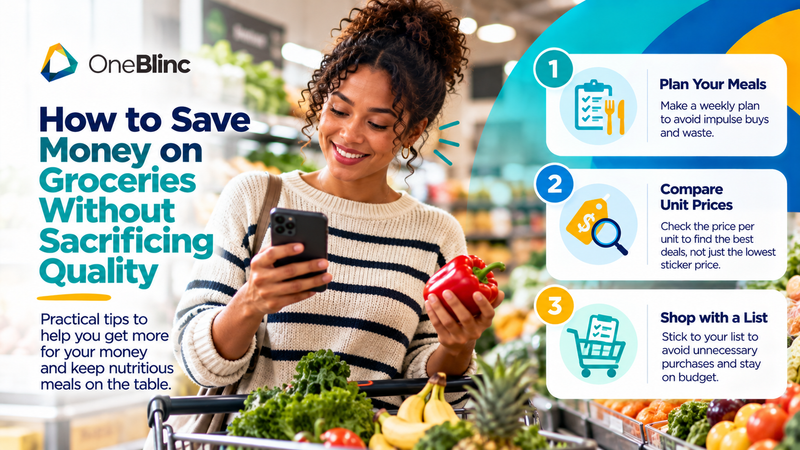
Check the pantry, freezer, and refrigerator before making a list. Using food you own prevents duplicate purchases and helps reduce spoilage.
Compare unit prices
A larger package is not automatically a better deal. Compare price per ounce, pound, or serving and consider whether your household can use it before it expires.
Choose flexible ingredients
Rice, beans, eggs, oats, frozen vegetables, and other versatile foods can work across multiple meals. Choose options that fit dietary needs and local prices.
Use promotions strategically
Coupons and store loyalty discounts help only when they reduce the cost of something you would otherwise buy. Avoid adding products solely because they are on sale.
Track waste as well as receipts
Throwing away unused produce or leftovers is a hidden grocery expense. Plan smaller batches, freeze extras, and review what consistently goes uneaten.
A practical example
If a household spends $140 each week, a 5% reduction would be $7 per week, or about $364 across 52 weeks, assuming spending and savings remain consistent.
Grocery savings checklist
Check your pantry, fridge, and freezer before writing a list.
Plan meals that share ingredients to reduce waste.
Compare unit prices instead of package prices.
Track what gets thrown away and adjust next week's list.
Where to shop matters
The same basket of groceries can cost noticeably different amounts depending on the store. Discount grocers, warehouse clubs, ethnic markets, and regular supermarkets each have strengths. Warehouse clubs may offer low unit prices on staples but require a membership fee and larger purchases. Discount grocers often have fewer brand choices but lower everyday prices. Local markets can be excellent for produce, spices, and specialty items. Try pricing ten items you buy every week at two or three nearby stores to see where your money goes furthest.
Use store tools without overspending
Check weekly flyers or apps before planning meals.
Load digital coupons only for items already on your list.
Compare pickup or delivery fees against the cost of driving to the store.
Consider store brands for pantry staples like flour, rice, canned goods, and spices.
Cook once, eat twice
Batch cooking can reduce both cost and stress. Preparing a large pot of soup, chili, or a casserole on a weekend can provide several meals during a busy week. Cooked grains, roasted vegetables, and proteins can be repurposed into bowls, wraps, or salads. Freezing portions prevents leftovers from going to waste and gives you a backup plan on nights when ordering takeout would be tempting.
Shop the store strategically
Store layouts are designed to encourage extra purchases. Staples like milk and eggs are often placed at the back, so you pass many other products to reach them. Eye-level shelves may hold higher-priced items, while lower or upper shelves can offer better value. Shopping with a list, eating before you go, and setting a time limit can reduce impulse buys.
A weekly savings example
A household that switches five items to store brands, saving about 50 cents each, and cuts one impulse purchase of around $6 per trip could save roughly $8.50 a week. Over a year, that adds up to more than $400.
Related OneBlinc guides
Explore OneBlinc
If a paycheck timing gap is part of your situation, download OneBlinc to explore BlincAdvance™ and check current eligibility and terms. OneBlinc offers a subscription service starting at $8.99 per month, a free standard deposit option, and an optional instant deposit for an additional fee. Available advance amounts depend on eligibility and applicable terms. Only use an advance when you have a clear repayment plan.
Educational content only; not individualized financial, legal, tax, or medical advice. Eligibility rules apply.
Frequently Asked Questions
Are store brands always cheaper?
Often, but not always. Compare unit prices and quality for the products you use.
Is buying in bulk worth it?
Only when the unit cost is lower and you can store and use the food before it spoils.
Do meal-planning apps help save money?
They can, if they help you plan around what you already have and avoid duplicate purchases. A simple written list works too.
OneBlinc Editorial Team
The OneBlinc Editorial Team writes practical guides on budgeting, paychecks, saving, and handling financial emergencies. Every article is researched, edited for accuracy, and updated when rules or products change. Our content is educational and is not individualized financial advice.
OneBlinc Blog
OneBlinc helps eligible workers manage paycheck timing with BlincAdvance™. Eligibility and terms apply.
Visit SiteDon't miss an update!
Subscribe to get our fresh news!