Paycheck Advances Explained: How They Work
How paycheck advances work: eligibility, fees, deposit options and repayment from your next paycheck, plus questions to ask before you use one...
Reviewed by Marco Moreno, Underwriter & Operations Manager · October 2026
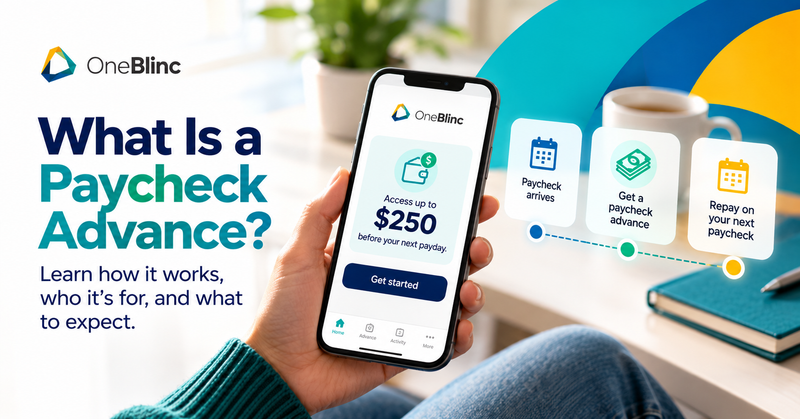
A paycheck advance is a way to access part of earnings ahead of the scheduled payday. Understanding the mechanics helps you distinguish a short-term timing tool from borrowing that may become difficult to repay.
What a paycheck advance means
Depending on the provider, an advance may be offered through an employer or a third-party app. The amount available can depend on eligibility rules, income information, and other factors. An advertised maximum is not an approval promise.
How eligibility is evaluated
Providers may ask for identity, employment or income details, and a connected account. The process and any credit-related consequences vary by service. Check the specific product disclosures rather than assuming every app works alike.
When the money arrives
Some services offer a standard transfer and a faster optional transfer. Timing can depend on processing windows, banks, and the transfer method. A faster option may have an additional fee.
How repayment works
Review the repayment date, authorization, and how it affects the following paycheck. A short-term advance is only manageable if enough remains for upcoming essentials.
What to compare before choosing
Look at subscription charges, optional transfer fees, eligibility restrictions, repayment timing, and customer support. Consider how frequently you expect to use the service; recurring costs add up even in months when you do not need an advance.
A practical example
Imagine receiving pay every other Friday but needing $75 for groceries on Wednesday. The important questions are not just whether $75 is available, but also what you pay for access and what remains on Friday.
Paycheck advance checklist
Read the eligibility requirements and what information the provider needs.
Note the repayment date and how the repayment will be collected.
Add up subscription fees and any optional instant-transfer charges.
Confirm your next paycheck still covers essentials after repayment.
Employer-based vs. app-based advances
Paycheck advances generally come from two types of sources, and they work a little differently.
Employer-based programs
Some employers partner with payroll providers to offer earned wage access. Workers can access a portion of wages they have already earned, and repayment is usually deducted from the next paycheck automatically. Availability depends entirely on whether your employer offers the benefit.
Direct-to-consumer apps
Other services work independently of your employer. They may review your bank account activity, income deposits, and other information to determine eligibility and available amounts. Repayment is typically collected from your linked bank account around your next payday. Terms, fees, and requirements vary widely by provider.
Signs an advance may not be the right fit
A paycheck advance can help bridge a short timing gap, but it is not the best tool for every situation. It may be worth considering other options if the amount you need is much larger than a typical advance, if you already expect your next paycheck to fall short of covering essentials, or if you have relied on advances several pay periods in a row. In those cases, a payment plan, assistance program, or longer-term budget review may provide more lasting relief.
Using an advance responsibly
If you decide an advance makes sense, a few habits can help you use it well. Request only the amount you need rather than the maximum available. Choose the standard transfer if you can wait, to avoid extra fees. Mark the repayment date on your calendar and make sure your account will have enough to cover it. After repayment, review what caused the gap and whether a small buffer or a bill date change could prevent it next time.
Understanding the full picture
Every provider should clearly explain its fees, eligibility requirements, repayment process, and how to cancel. If any of these details are hard to find or unclear, take extra time before signing up. Reading the terms carefully helps you avoid surprises and choose a service that matches your needs.
Related OneBlinc guides
Explore OneBlinc
If a paycheck timing gap is part of your situation, download OneBlinc to explore BlincAdvance™ and check current eligibility and terms. OneBlinc offers a subscription service starting at $8.99 per month, a free standard deposit option, and an optional instant deposit for an additional fee. Available advance amounts depend on eligibility and applicable terms. Only use an advance when you have a clear repayment plan.
Educational content only; not individualized financial, legal, tax, or medical advice. Eligibility rules apply.
Frequently Asked Questions
Is a paycheck advance the same as a payday loan?
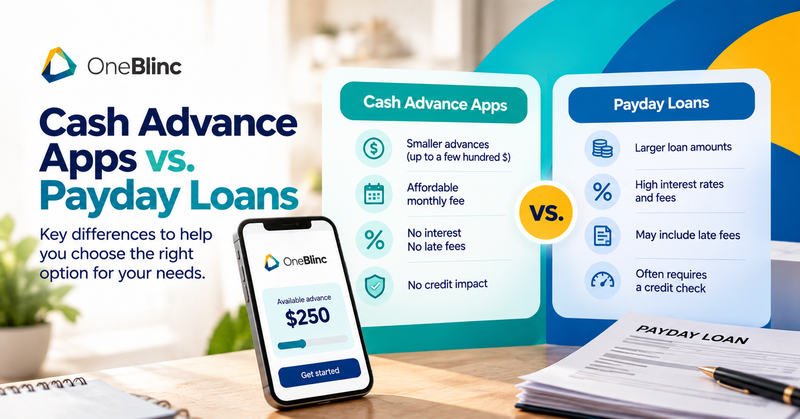
Not necessarily. Structures, fees, repayment methods, and legal classifications differ by product and jurisdiction.
Should I use advances every pay period?
Frequent reliance can indicate a recurring budget shortfall. Review expenses and consider additional support if the cycle continues.
What does a OneBlinc paycheck advance cost?
OneBlinc offers a subscription priced at $8.99 per month, a free standard deposit option, and an optional instant deposit for an additional fee. Advance amounts depend on eligibility and applicable terms.
OneBlinc Editorial Team
The OneBlinc Editorial Team writes practical guides on budgeting, paychecks, saving, and handling financial emergencies. Every article is researched, edited for accuracy, and updated when rules or products change. Our content is educational and is not individualized financial advice.
OneBlinc Blog
OneBlinc helps eligible workers manage paycheck timing with BlincAdvance™. Eligibility and terms apply.
Visit SiteDon't miss an update!
Subscribe to get our fresh news!