
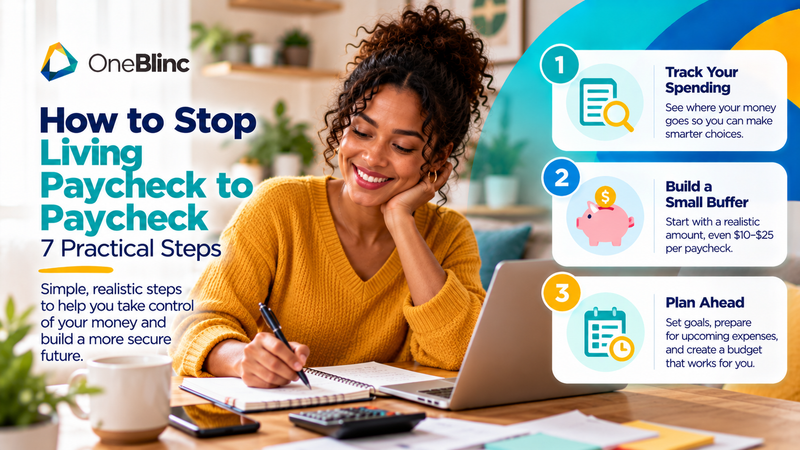
How to Stop Living Paycheck to Paycheck: 7 Practical Steps
Seven steps to build breathing room: map your cash flow, protect essentials, make one repeatable cut, start a buffer and plan for irregular bills...
Reviewed by Gil Hackl, Fintech Builder & Operator · October 2026
Living paycheck to paycheck means most income is committed before the next deposit arrives. Changing that pattern takes time, but small structural improvements can create more flexibility.
1. Map your cash flow
List every expected deposit and bill for the next month. Mark dates, not just amounts, to identify where timing causes problems.
2. Protect essentials first
Housing, food, utilities, transportation, and necessary healthcare take priority. Build the budget around the real cost of these needs.
3. Find one repeatable reduction
Review unused subscriptions, service plans, fees, and frequent small purchases. Choose one change you can sustain rather than cutting everything at once.
4. Move a bill date when possible
Some providers allow due-date changes. Aligning a bill with payday may reduce overdraft risk without changing total spending.
5. Create a starter buffer
Even a small reserve can prevent a minor surprise from disrupting the whole paycheck. Automate a manageable amount when possible.
6. Make a plan for irregular costs
Set aside small amounts for maintenance, school costs, annual renewals, and other expenses that are predictable but infrequent.
7. Revisit income and support options
If essentials exceed income despite careful budgeting, explore benefits, employment opportunities, debt assistance, or community resources. The issue may be a structural income gap rather than spending habits.
A practical example
If you free up $15 each payday and are paid biweekly, that is potentially $390 in a year across 26 pay periods, assuming you can maintain the change.
Paycheck-to-paycheck reset checklist
Map every deposit and bill date for the next 30 days.
Pick one recurring expense to reduce or cancel this month.
Ask one provider about moving a due date closer to payday.
Start a small buffer, even if it is only a few dollars per paycheck.
Why living paycheck to paycheck is so common
Running out of money before payday is not always a sign of poor budgeting. Rising housing and food costs, irregular work hours, medical expenses, and caring for family members can all stretch a paycheck thin. Recognizing the cause matters because the solution depends on it. If spending habits are the main issue, small cuts may help. If income simply does not cover essentials, the focus may need to shift toward increasing income, finding assistance, or reducing a major fixed cost like housing or transportation.
A 30-day reset plan
Week one: get the full picture
List every account, bill, due date, and debt. Look at the last two months of transactions to see where money actually went, not where you thought it went.
Week two: protect the essentials
Build a basic plan that covers housing, food, utilities, transportation, and minimum payments first. Identify which bills could be moved to better match your paydays.
Week three: find your first savings
Choose two or three expenses to reduce or cancel. Redirect that money to a small savings account, even if the amount is modest.
Week four: review and adjust
Compare what you planned with what actually happened. Adjust categories that were unrealistic and keep the changes that worked.
How to stay motivated
Breaking the cycle usually takes months, not weeks, so it helps to focus on progress rather than perfection. Track one or two numbers that matter to you, such as the balance in your savings account or the number of days your checking balance stayed positive before payday. Share your goals with someone you trust if that helps you stay accountable. If an unexpected expense sets you back, treat it as part of the process rather than a failure. Every month with a little more breathing room is a step forward.
Related OneBlinc guides
Explore OneBlinc
If a paycheck timing gap is part of your situation, download OneBlinc to explore BlincAdvance™ and check current eligibility and terms. OneBlinc offers a subscription service starting at $8.99 per month, a free standard deposit option, and an optional instant deposit for an additional fee. Available advance amounts depend on eligibility and applicable terms. Only use an advance when you have a clear repayment plan.
Educational content only; not individualized financial, legal, tax, or medical advice. Eligibility rules apply.
Frequently Asked Questions
How long does it take to stop living paycheck to paycheck?
There is no universal timeline. Income, debt, household costs, and unexpected events all affect progress.
Should I stop all discretionary spending?
Not necessarily. A realistic budget is usually easier to maintain than one that leaves no room for normal life.
Can a side job help me stop living paycheck to paycheck?
Extra income can help, but consider the time involved, work-related costs, and taxes before committing.
OneBlinc Editorial Team
The OneBlinc Editorial Team writes practical guides on budgeting, paychecks, saving, and handling financial emergencies. Every article is researched, edited for accuracy, and updated when rules or products change. Our content is educational and is not individualized financial advice.
OneBlinc Blog
OneBlinc helps eligible workers manage paycheck timing with BlincAdvance™. Eligibility and terms apply.
Visit SiteDon't miss an update!
Subscribe to get our fresh news!