
How to Split Rent Between Paychecks Without Falling Behind
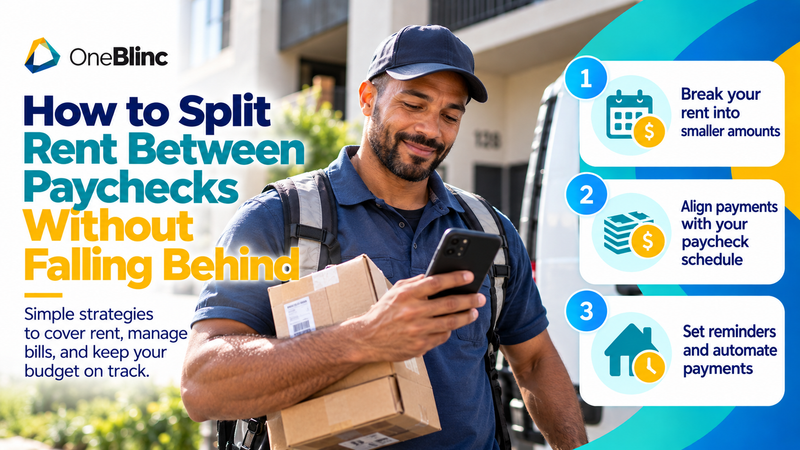
Rent too big for one paycheck? Build a rent reserve from each check, keep it separate, protect the due date and talk to your landlord early...
Reviewed by Gil Hackl, Fintech Builder & Operator · October 2026
Rent is often the largest monthly bill, and a single paycheck may not comfortably cover it. Dividing the obligation across pay periods can make the due date more manageable.
Calculate your rent reserve
If monthly rent is $1,400 and you are paid twice monthly, reserving $700 from each check is a simple approach. If you are paid biweekly, use an annual calculation to account for 26 checks.
Keep the reserve separate
A designated savings bucket or subaccount can reduce the temptation to spend money already committed to rent. Check transfer timing before relying on the balance.
Protect the payment date
Track the lease due date, grace period, and any late fees. Set reminders several days before rent is due.
Talk to your landlord early
If you expect a shortfall, ask about a written payment arrangement before the deadline. Never assume a partial payment prevents late fees or other consequences.
Address a recurring shortfall
If rent repeatedly consumes more than available income, investigate local rental assistance, household expenses, or longer-term housing options.
Three ways to split rent across paychecks
The even split
Set aside the same amount from each paycheck until rent is due. This is simple and works well for twice-monthly pay. For example, $1,400 in rent becomes $700 from each of two checks.
The front-loaded split
Reserve a larger share from the paycheck right after rent is paid and a smaller share from the next one. This builds the rent fund early and leaves more breathing room just before the due date, when other bills may cluster.
The biweekly annual method
Multiply monthly rent by 12, then divide by 26 paychecks. For $1,400 rent, that is about $646 per paycheck. Saving that amount from every biweekly check covers rent all year, with a small surplus building during three-paycheck months.
Where to keep your rent money
Keeping rent funds in the same account as everyday spending makes it easy to dip into them accidentally. A separate savings account, a sub-account, or a labeled savings bucket at your bank can help. Check how long transfers take, and move the money back to checking a few days before rent is due so the payment does not bounce.
Know your lease and your rights
Your lease should explain the due date, grace period, late fees, and accepted payment methods. Some landlords allow partial payments or split due dates if you ask. Tenant protections vary by state and city, so if you are facing a serious shortfall, local tenant rights organizations or legal aid groups can explain your options. Communicating early with your landlord, and keeping records of every payment and agreement, protects you if questions arise later.
When rent takes too much of your income
A common guideline suggests housing costs should take up no more than about 30% of gross income, though that can be difficult in high-cost areas. If rent consistently consumes most of your paycheck, splitting it across pay periods helps with timing but not the underlying gap. Options may include finding a roommate, negotiating at lease renewal, looking into local rental assistance, or planning a move to a lower-cost home when your lease ends.
What to do if you share rent with roommates
Splitting rent with roommates adds another layer of timing. Agree in writing on each person's share, the date funds must be transferred, and who sends the payment to the landlord. Using a shared payment app or a joint account just for rent can make the process transparent. If one roommate pays late, the whole household may face a late fee, so discuss in advance what happens if someone falls short and how utilities and deposits will be divided.
Related OneBlinc guides
Explore OneBlinc
If a paycheck timing gap is part of your situation, download OneBlinc to explore BlincAdvance™ and check current eligibility and terms. OneBlinc offers a subscription service starting at $8.99 per month, a free standard deposit option, and an optional instant deposit for an additional fee. Available advance amounts depend on eligibility and applicable terms. Only use an advance when you have a clear repayment plan.
Educational content only; not individualized financial, legal, tax, or medical advice. Eligibility rules apply.
Frequently Asked Questions
Can I pay rent in two installments?
Only if the landlord or lease permits it. Get any change in writing.
Should I use a credit card to pay rent?
Compare processing fees, interest, and repayment risk before doing so.
What if I can only pay part of the rent on time?
Contact your landlord before the due date, ask about a written arrangement, and confirm whether late fees or other consequences still apply.
OneBlinc Editorial Team
The OneBlinc Editorial Team writes practical guides on budgeting, paychecks, saving, and handling financial emergencies. Every article is researched, edited for accuracy, and updated when rules or products change. Our content is educational and is not individualized financial advice.
OneBlinc Blog
OneBlinc helps eligible workers manage paycheck timing with BlincAdvance™. Eligibility and terms apply.
Visit SiteDon't miss an update!
Subscribe to get our fresh news!