How to Save Money on Childcare Without Compromising Quality
Lower childcare costs safely: check licensing, ask about assistance programs, compare total costs and use tax benefits and employer programs...
Reviewed by Ashley Anderson, Support Operations & AI Automation Specialist · October 2026
Childcare is one of the largest expenses for many working families. Finding a lower-cost arrangement should never mean compromising safety, reliability, or the care your child needs.
Start with safety and licensing
Check local licensing requirements, caregiver qualifications, inspection information where available, and emergency procedures. Compare quality and fit before comparing price alone.
Ask about assistance programs
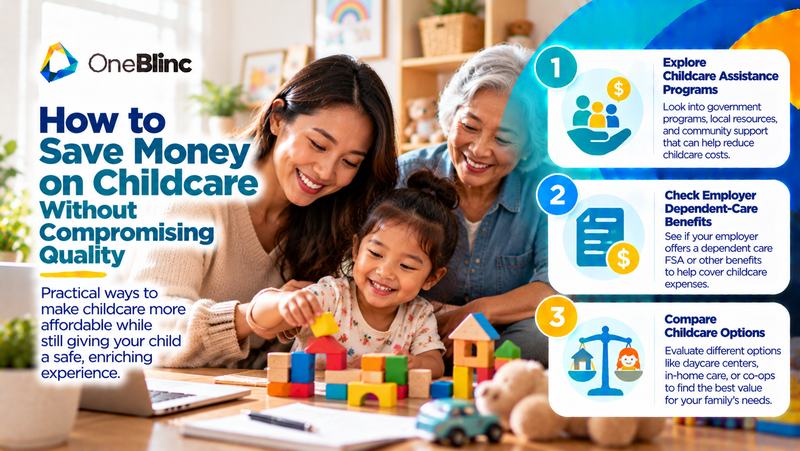
State and local childcare subsidy programs may help eligible families. Employers may also offer dependent-care benefits or other support.
Compare schedules and total costs
A slightly higher weekly rate may include meals, supplies, or more flexible hours. Ask about registration fees, late-pickup charges, closures, and deposit requirements.
Explore flexible arrangements
Depending on your work schedule and local rules, part-time care, coordinated family schedules, or vetted shared-care arrangements may reduce costs.
Plan for backup care
A childcare closure can lead to lost work hours or last-minute expenses. Identify a trusted backup plan and set aside a small reserve if possible.
A practical example
Compare a center charging $240 weekly with another charging $220 plus recurring supply and late-pickup fees. The lower advertised rate is not necessarily the lower total cost.
Childcare cost checklist
Verify licensing and safety information for each option.
Ask about registration fees, late-pickup charges, and closure policies.
Check state assistance programs and employer dependent-care benefits.
Plan a backup care option for closures or sick days.
Compare childcare options side by side
Families usually choose among licensed centers, licensed home-based care, nannies or shared nannies, and help from relatives. Each comes with trade-offs. Centers often have structured programs and backup staff but may close for holidays and charge for days your child is absent. Home-based programs can be more flexible and sometimes less expensive, though capacity is limited. A nanny offers one-on-one care at home but may involve payroll taxes and other employer responsibilities. Relatives may cost less, but clear expectations about schedules and payment help protect the relationship.
Questions to ask every provider
What is included in tuition, such as meals, diapers, or supplies?
How are holidays, sick days, and vacations billed?
How much notice is required to change schedules or withdraw?
What is the staff-to-child ratio for your child's age group?
Use tax benefits and employer programs
Depending on your situation, you may be eligible for the federal Child and Dependent Care Credit, and some employers offer dependent care flexible spending accounts that let you pay eligible costs with pre-tax income. Rules, limits, and eligibility change, so confirm current details with official IRS resources or a qualified tax professional. Ask your HR department whether your employer offers childcare discounts, backup care, or referral services. These benefits are easy to miss because they are often buried in enrollment materials.
Plan for the summer and school-age years
Childcare costs do not end when a child starts school. Before- and after-school programs, school breaks, and summer camps can create expensive gaps. Start researching summer options early in the year, since popular programs fill quickly. Some families trade care with neighbors or coordinate schedules with relatives to cover shorter breaks. Adding a small amount to a dedicated childcare fund each month can make those seasonal expenses easier to handle when they arrive.
A quick cost comparison example
Suppose Center A charges $260 per week with meals included, while Center B charges $235 per week plus a $150 annual supply fee and about $15 per week in packed-lunch costs. Over 50 weeks, Center A totals about $13,000, while Center B comes to roughly $12,650. The difference is smaller than the weekly rate suggests, so quality, location, and schedule fit may matter more than price.
Related OneBlinc guides
Explore OneBlinc
If a paycheck timing gap is part of your situation, download OneBlinc to explore BlincAdvance™ and check current eligibility and terms. OneBlinc offers a subscription service starting at $8.99 per month, a free standard deposit option, and an optional instant deposit for an additional fee. Available advance amounts depend on eligibility and applicable terms. Only use an advance when you have a clear repayment plan.
Educational content only; not individualized financial, legal, tax, or medical advice. Eligibility rules apply.
Frequently Asked Questions
Are there government programs for childcare costs?
Programs vary by state and household eligibility. Start with your state’s official childcare assistance resources.
Should I choose the cheapest childcare option?
Not automatically. Safety, quality, schedule reliability, and total costs should all be considered.
Can a dependent care FSA help with childcare costs?
If your employer offers one, it may let you pay eligible childcare expenses with pre-tax dollars. Check your plan's rules and limits.
OneBlinc Editorial Team
The OneBlinc Editorial Team writes practical guides on budgeting, paychecks, saving, and handling financial emergencies. Every article is researched, edited for accuracy, and updated when rules or products change. Our content is educational and is not individualized financial advice.
OneBlinc Blog
OneBlinc helps eligible workers manage paycheck timing with BlincAdvance™. Eligibility and terms apply.
Visit SiteDon't miss an update!
Subscribe to get our fresh news!