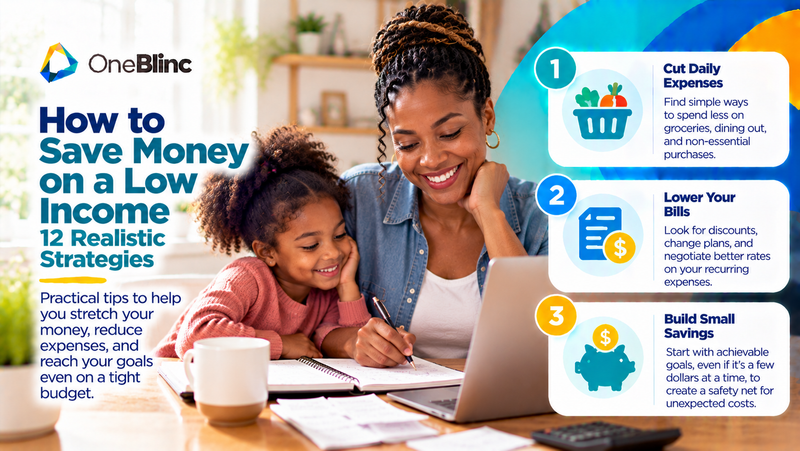
How to Save Money on a Low Income: 12 Realistic Strategies
Twelve realistic ways to save when money is tight, from small automatic transfers and benefit checks to cutting fees and planning ahead...
Reviewed by Gil Hackl, Fintech Builder & Operator · October 2026
Saving on a limited income is difficult when essentials already take most of the paycheck. The most useful strategies are realistic, protect household needs, and recognize that sometimes the gap cannot be solved by cutting spending alone.
1–3. Track essentials, benefits, and bill dates
List the actual cost of housing, food, transportation, and healthcare. Check eligibility for public or community assistance through official channels. Ask providers whether due dates can be adjusted.
4–6. Review recurring fees, plans, and groceries
Look for unused subscriptions, avoidable banking charges, and lower-cost phone or internet plans. Plan groceries around items already on hand and compare unit prices.
7–9. Use small savings targets and sinking funds
Start with an achievable amount, even if it is only a few dollars per paycheck. Set aside money for known irregular expenses and use a separate savings account if it helps protect the funds.
10–11. Reduce transportation waste and compare services
Combine errands where possible, maintain your vehicle, and compare recurring household services without sacrificing essential coverage.
12. Explore income and support opportunities
If necessary expenses exceed reliable income, research wage opportunities, training, assistance programs, or professional debt counseling. Budgeting alone cannot close every income gap.
A practical example
Putting aside $5 per week could produce $260 in a year if contributions are consistent. That may not solve a major emergency, but it can help with a small unexpected expense.
Low-income savings checklist
List essential costs first and protect them in your plan.
Check eligibility for assistance programs through official sources.
Choose a savings amount you can repeat without missing essentials.
Review one recurring bill each month for a lower-cost option.
Benefits and programs worth checking
Many households that qualify for support never apply, often because they assume they earn too much or the process seems complicated. Depending on your income, household size, and location, you may be eligible for programs that reduce essential costs and free up money to save.
Food assistance such as SNAP or WIC for eligible families.
Utility assistance through programs like LIHEAP or utility hardship plans.
Internet and phone discounts offered by some providers to eligible households.
Tax credits such as the Earned Income Tax Credit, which can provide a meaningful refund for qualifying workers.
Free tax preparation through the IRS Volunteer Income Tax Assistance program.
Always apply through official government websites or trusted local agencies, and be cautious of anyone who charges a fee to help you sign up for public benefits.
Turn windfalls into savings
When income is tight, a tax refund, a bonus, or a gift can be the most realistic opportunity to build a cushion. Before the money arrives, decide how you will divide it. One simple approach is to cover any urgent essentials first, put a set share into savings, and allow a small portion for something you enjoy. Planning ahead makes it less likely the money disappears into daily spending without a trace.
Track progress in a way that motivates you
Small savings can feel invisible, which makes them easy to abandon. Give your savings account a name that reflects its purpose, like "car repair cushion" or "rent buffer." Write down your balance once a month and notice how it changes over time. Celebrate milestones such as your first $50 or $100. Progress may be gradual, but seeing it clearly can help you stay consistent through difficult months.
Related OneBlinc guides
Explore OneBlinc
If a paycheck timing gap is part of your situation, download OneBlinc to explore BlincAdvance™ and check current eligibility and terms. OneBlinc offers a subscription service starting at $8.99 per month, a free standard deposit option, and an optional instant deposit for an additional fee. Available advance amounts depend on eligibility and applicable terms. Only use an advance when you have a clear repayment plan.
Educational content only; not individualized financial, legal, tax, or medical advice. Eligibility rules apply.
Frequently Asked Questions
What if there is nothing left to save?
Prioritize essentials and explore available assistance or income options. Avoid setting a savings target that forces you to skip necessary expenses.
Is saving a tiny amount worthwhile?
It can be, as long as doing so does not jeopardize food, housing, medication, or other essentials.
Are there programs that help lower-income households save?
Some community organizations offer matched-savings or financial coaching programs for eligible participants. Check local nonprofits and official sources.
OneBlinc Editorial Team
The OneBlinc Editorial Team writes practical guides on budgeting, paychecks, saving, and handling financial emergencies. Every article is researched, edited for accuracy, and updated when rules or products change. Our content is educational and is not individualized financial advice.
OneBlinc Blog
OneBlinc helps eligible workers manage paycheck timing with BlincAdvance™. Eligibility and terms apply.
Visit SiteDon't miss an update!
Subscribe to get our fresh news!