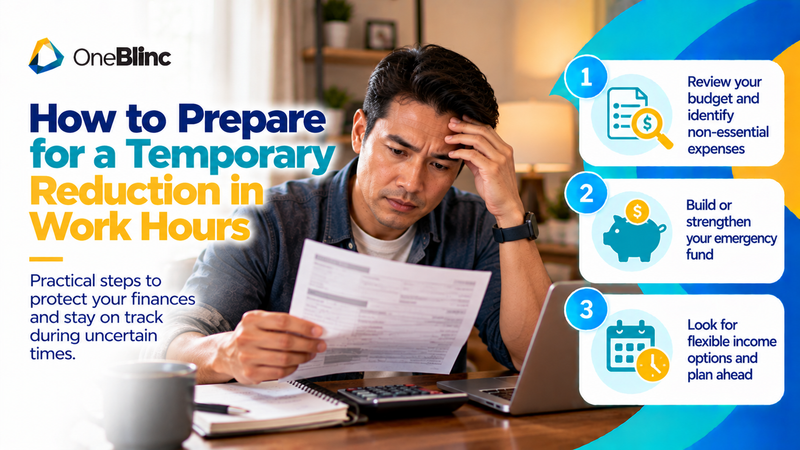
How to Prepare for a Temporary Reduction in Work Hours
Fewer hours on your schedule? Rebuild your budget around reduced pay, protect essential bills and talk to providers before payments fall behind...
Reviewed by Gil Hackl, Fintech Builder & Operator · October 2026
A temporary cut in work hours can quickly affect essential bills. Acting early can make the adjustment less disruptive.
Estimate the new take-home amount
Use the expected hours and payroll deductions to approximate upcoming deposits. Confirm scheduling details with your employer.
Rank essential expenses
Protect housing, food, utilities, necessary transportation, and healthcare. Pause discretionary commitments before missing critical payments.
Contact billers before due dates
Ask about hardship plans, due-date changes, or temporary payment arrangements. Request written confirmation of any agreement.
Check assistance eligibility
Depending on location and employment circumstances, partial unemployment benefits, food assistance, or community programs may be available.
Make a recovery plan
When hours return, prioritize catching up on essential obligations and rebuilding a small buffer before restoring optional spending.
Build a reduced-hours budget
When hours drop, a regular budget may no longer work. Creating a temporary version helps you see clearly what you can afford until hours return.
Step 1: Estimate your new income
Multiply your expected hours by your hourly rate, then subtract a rough estimate for taxes and deductions using a recent pay stub as a guide. If your hours change week to week, use the lowest likely number.
Step 2: List essential costs
Write down rent or mortgage, utilities, groceries, transportation, insurance, and minimum debt payments. These are the expenses that need to be covered first.
Step 3: Find the gap
Subtract essential costs from your new income. If the number is negative, that is the gap you need to close through reduced spending, assistance, or added income.
Step 4: Pause the rest
Temporarily pause savings contributions above a minimum, extra debt payments, subscriptions, and discretionary spending. These can resume when hours come back.
Ways to replace lost income
Depending on your skills and schedule, there may be ways to fill part of the gap. Ask your employer whether shifts are available in other departments or locations. Consider short-term gig work, freelance projects, or seasonal jobs that fit around your existing schedule. Selling items you no longer need can also provide a one-time boost. Before taking on extra work, check whether it could affect any benefits you receive, and keep track of income for tax purposes.
Talk to your employer
It can help to have a direct conversation with your manager or HR department. Ask how long the reduced schedule is expected to last, whether it affects your benefits such as health insurance, and whether there are opportunities for additional hours or cross-training. Some employers offer hardship programs or emergency assistance funds that employees may not know about.
Protect your health coverage
If reduced hours put your employer-sponsored health insurance at risk, find out the eligibility threshold and timeline. If coverage may end, research alternatives early, such as plans through the Health Insurance Marketplace or programs like Medicaid if you qualify. A loss of coverage can often trigger a special enrollment period, but deadlines apply.
Example: from 40 to 28 hours a week
Imagine earning $18 an hour and dropping from 40 to 28 hours a week. Gross weekly pay falls from $720 to $504, a reduction of $216 before taxes. Over a month, that can mean roughly $900 to $950 less in gross income. Seeing the number clearly helps you decide what to pause first, which providers to call, and how much additional income would be needed to close the gap. Even recovering a few extra shifts a month can make a meaningful difference while you wait for regular hours to return.
Look after your well-being
A sudden income drop can be stressful. Focus on the next step rather than every problem at once, and lean on trusted friends, family, or community resources when needed.
Related OneBlinc guides
Explore OneBlinc
If a paycheck timing gap is part of your situation, download OneBlinc to explore BlincAdvance™ and check current eligibility and terms. OneBlinc offers a subscription service starting at $8.99 per month, a free standard deposit option, and an optional instant deposit for an additional fee. Available advance amounts depend on eligibility and applicable terms. Only use an advance when you have a clear repayment plan.
Educational content only; not individualized financial, legal, tax, or medical advice. Eligibility rules apply.
Frequently Asked Questions
Can reduced hours qualify for unemployment assistance?
Sometimes. Rules vary by state and circumstances; check the official state agency.
Should I cancel every subscription immediately?
Start with unused or flexible expenses, but preserve services necessary for work, health, or safety.
How soon should I contact billers after my hours are reduced?
As soon as you expect a shortfall. Providers usually have more options available before a payment becomes late.
OneBlinc Editorial Team
The OneBlinc Editorial Team writes practical guides on budgeting, paychecks, saving, and handling financial emergencies. Every article is researched, edited for accuracy, and updated when rules or products change. Our content is educational and is not individualized financial advice.
OneBlinc Blog
OneBlinc helps eligible workers manage paycheck timing with BlincAdvance™. Eligibility and terms apply.
Visit SiteDon't miss an update!
Subscribe to get our fresh news!