How to Negotiate Medical Bills and Set Up a Payment Plan
How to check a medical bill for errors, request an itemized statement, ask about financial assistance and set up a payment plan you can manage...
Reviewed by Ashley Anderson, Support Operations & AI Automation Specialist · October 2026
A medical bill can be confusing even when you have insurance. Before paying or agreeing to financing, verify the charges and ask what assistance the provider offers.
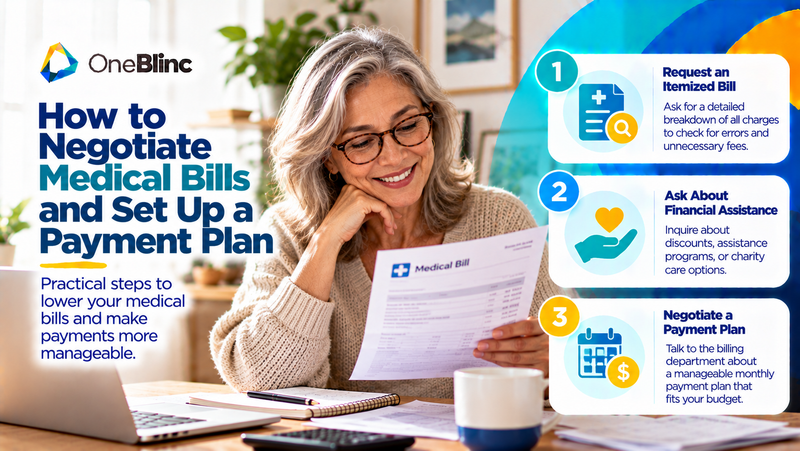
Request an itemized bill
Check dates, services, duplicate charges, and the patient balance. Compare the bill with any explanation of benefits from your insurer; an explanation of benefits is not itself a bill.
Ask the insurer or provider to review errors
If a claim appears incorrect, contact the billing office and insurer. Keep copies of statements, reference numbers, and the names of representatives you speak with.
Ask about financial assistance
Hospitals and health systems may have financial-assistance or charity-care policies. Eligibility varies, so request the application and required documentation.
Negotiate a manageable payment plan
Explain what you can realistically afford each month and ask whether interest or fees apply. Get the agreed terms in writing and understand what happens if a payment is missed.
Keep essential bills protected
Do not agree to a payment that leaves you unable to cover housing, food, or necessary medication. Consider nonprofit credit counseling or a patient advocate for complicated situations.
A practical example
For a $600 patient balance, ask whether the provider can correct any billing errors or offer assistance before considering a six-month $100 payment plan. The appropriate plan depends on the provider’s policies and your budget.
Medical bill checklist
Request an itemized bill and compare it with your explanation of benefits.
Ask the billing office about errors, discounts, and financial assistance.
Negotiate a monthly payment you can realistically afford.
Get the payment plan terms in writing.
Common billing errors to look for
Medical bills are complex, and mistakes happen. Reviewing line items carefully can reveal charges that should be corrected before you pay anything.
Duplicate charges: the same test, supply, or service billed twice.
Services not received: items listed for a procedure that was canceled or changed.
Coding issues: a routine visit billed as a more complex one.
Insurance not applied: a claim that was never submitted or was processed with the wrong member information.
Out-of-network surprises: charges from a provider you did not choose, which may be subject to consumer protections in some situations.
What to say when you call the billing office
Calls go more smoothly with a short plan. Have your account number, itemized bill, and explanation of benefits ready. Start by confirming the balance and asking whether the claim has been fully processed by insurance. Then ask directly: Do you offer a financial assistance or charity care program? Is there a discount for paying in full or for uninsured patients? What is the lowest monthly payment you can accept without interest? Take notes during the call, including the representative's name and the date. If you reach an agreement, ask for it in writing before making the first payment.
If the bill has gone to collections
Ask the collector to validate the debt in writing, and compare their information with your own records. Continue communicating with the original provider when possible, since they may still be able to review errors or assistance applications. Reporting rules for medical debt can change, so check current guidance from the Consumer Financial Protection Bureau if you are concerned about credit effects.
Protect your future self
Before your next nonemergency appointment, ask for a cost estimate and confirm that the provider and facility are in network. Keep a folder for statements, explanations of benefits, and payment confirmations. Organized records make it much easier to spot problems and resolve disputes quickly.
Related OneBlinc guides
Explore OneBlinc
If a paycheck timing gap is part of your situation, download OneBlinc to explore BlincAdvance™ and check current eligibility and terms. OneBlinc offers a subscription service starting at $8.99 per month, a free standard deposit option, and an optional instant deposit for an additional fee. Available advance amounts depend on eligibility and applicable terms. Only use an advance when you have a clear repayment plan.
Educational content only; not individualized financial, legal, tax, or medical advice. Eligibility rules apply.
Frequently Asked Questions
Can medical bills be negotiated?
Sometimes. Providers may correct errors, offer discounts, or approve assistance and payment arrangements.
Should I pay immediately if I do not recognize a charge?
First verify the bill with the provider and insurer, especially if the services or amounts are unfamiliar.
Should I request an itemized bill even if I have insurance?
Yes. An itemized bill helps you compare charges with your insurer's explanation of benefits and spot errors or duplicates.
OneBlinc Editorial Team
The OneBlinc Editorial Team writes practical guides on budgeting, paychecks, saving, and handling financial emergencies. Every article is researched, edited for accuracy, and updated when rules or products change. Our content is educational and is not individualized financial advice.
OneBlinc Blog
OneBlinc helps eligible workers manage paycheck timing with BlincAdvance™. Eligibility and terms apply.
Visit SiteDon't miss an update!
Subscribe to get our fresh news!