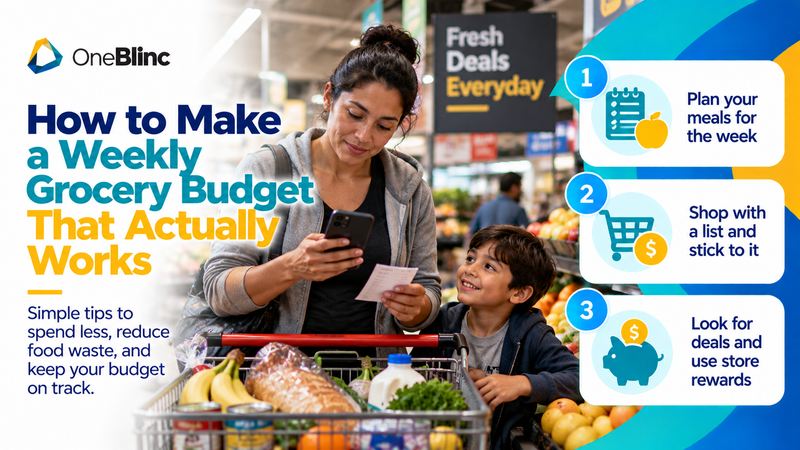
How to Make a Weekly Grocery Budget That Actually Works
Set a weekly grocery budget from recent receipts, plan meals with overlapping ingredients and compare unit prices so the budget holds...
Reviewed by Ashley Anderson, Support Operations & AI Automation Specialist · October 2026
A weekly grocery limit works best when it reflects your household, local prices, and meals you will actually prepare—not a number chosen because it sounds frugal.
Start with recent receipts
Add up several weeks of grocery purchases and separate food from cleaning supplies, toiletries, and other household items.
Choose a realistic target
Reduce the average modestly rather than setting an aggressive cap that leads to extra store trips. Account for dietary needs and household size.
Plan meals around overlapping ingredients
Choose a few recipes that share vegetables, grains, proteins, or pantry staples. Check the freezer and refrigerator before shopping.
Compare price per unit
A sale sticker is not proof of savings. Compare price per ounce or serving, and buy bulk only when you can store and use it.
Review what was wasted
Track food discarded at the end of the week. Smaller packages may be cheaper overall when larger ones spoil.
How much should a weekly grocery budget be?
There is no universal number, because costs depend on household size, ages, dietary needs, and local prices. The U.S. Department of Agriculture publishes food plans at several cost levels, which can offer a useful reference point for what a nutritious diet might cost for families of different sizes. Compare those estimates with your own receipts. If your spending is far above the reference, there may be room to adjust. If it is close, savings may come more from reducing waste than from cutting further.
Build a weekly meal plan in four steps
1. Check what you already have
Start with the refrigerator, freezer, and pantry. Plan at least two meals around ingredients you already own.
2. Pick a few flexible meals
Choose recipes that share ingredients. A bag of rice, a package of chicken thighs, and a few vegetables can become a stir-fry, burrito bowls, and soup during the same week.
3. Plan for leftovers
Cook larger portions on busy nights so lunches are covered. Planning one leftover night per week reduces both cost and cooking time.
4. Write a list by store section
Organizing your list by produce, dairy, pantry, and frozen helps you move through the store quickly and avoid wandering into impulse purchases.
Ways to stretch your grocery dollars
Buy produce that is in season, which is often less expensive and fresher.
Choose frozen fruits and vegetables for items you will not use within a few days.
Use beans, lentils, eggs, and canned fish as affordable protein options.
Compare the price of pre-cut produce with whole items you can prepare yourself.
Limit trips to the store, since each visit is a chance to buy more than planned.
Track for a month, then adjust
Record what you spend each week for four weeks. Note what went well and what led to overspending, such as a last-minute trip or a recipe that called for expensive ingredients. Small adjustments based on real data usually lead to a budget that feels sustainable rather than restrictive.
A sample weekly grocery plan
For a household of two with an $85 weekly target, the plan might include oatmeal and fruit for breakfasts, sandwiches and leftovers for lunches, and four dinners: a sheet-pan chicken and vegetables, a pot of chili, pasta with sautéed greens, and a rice-and-bean bowl using leftover chili. One night is reserved for leftovers and one for a simple meal from pantry staples. Prices vary by location, but planning meals that reuse ingredients can make a modest weekly budget workable without feeling restrictive. If you go over one week, look at what caused it and adjust the following week rather than abandoning the plan.
Related OneBlinc guides
Explore OneBlinc
If a paycheck timing gap is part of your situation, download OneBlinc to explore BlincAdvance™ and check current eligibility and terms. OneBlinc offers a subscription service starting at $8.99 per month, a free standard deposit option, and an optional instant deposit for an additional fee. Available advance amounts depend on eligibility and applicable terms. Only use an advance when you have a clear repayment plan.
Educational content only; not individualized financial, legal, tax, or medical advice. Eligibility rules apply.
Frequently Asked Questions
Does a grocery budget include takeout?
You can track takeout separately so the true cost of food is visible.
What if food prices rise?
Update the target using current receipts; a budget should reflect reality, not punish essential spending.
How often should I adjust my grocery budget?
Review it every month or two using recent receipts, and update it when household size, dietary needs, or local prices change.
OneBlinc Editorial Team
The OneBlinc Editorial Team writes practical guides on budgeting, paychecks, saving, and handling financial emergencies. Every article is researched, edited for accuracy, and updated when rules or products change. Our content is educational and is not individualized financial advice.
OneBlinc Blog
OneBlinc helps eligible workers manage paycheck timing with BlincAdvance™. Eligibility and terms apply.
Visit SiteDon't miss an update!
Subscribe to get our fresh news!