
How to Handle an Emergency Car Repair When Money Is Tight
Facing a car repair you can't afford? Get a clear estimate, decide what is urgent, compare shops and plan how to pay without missing work...
Reviewed by Ashley Anderson, Support Operations & AI Automation Specialist · October 2026
When your car gets you to work, a breakdown can threaten both your transportation and your paycheck. The goal is to restore safe, reliable transportation while keeping the total cost manageable.
Confirm what is urgent
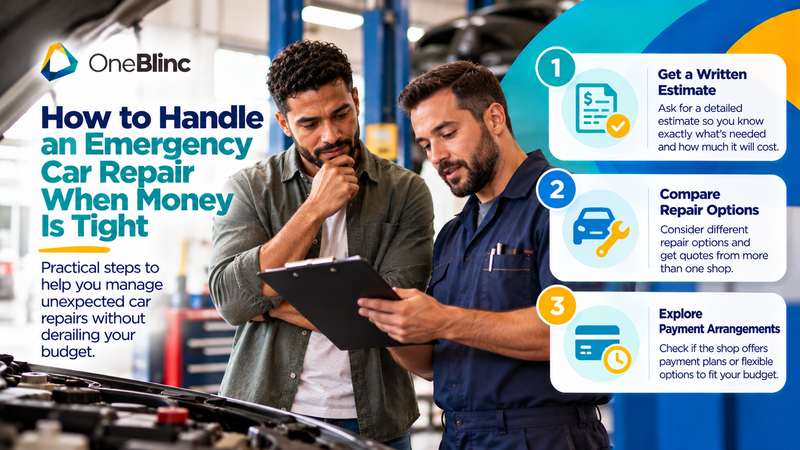
Ask the mechanic to separate safety-critical repairs from maintenance that can wait. Request a written estimate showing parts, labor, taxes, and diagnostic fees.
Consider a second estimate
For major repairs, a second qualified shop may offer a different diagnosis or price. Ask about warranties and whether refurbished or aftermarket parts are appropriate.
Check coverage and assistance
Review warranties, roadside assistance, insurance coverage where relevant, and any employer transportation benefits. Not every repair is covered, but checking may save money.
Ask about payment options
Some shops offer payment plans or allow staged repairs. Read the terms and total cost before agreeing to financing.
Protect next-paycheck essentials
If you use savings or an advance, calculate what remains for rent, groceries, and other bills after repayment. A quick fix that creates another shortfall may not be sustainable.
A practical example
For a $450 repair, request a line-item estimate and ask which items must be completed now for safe driving. A $75 diagnostic fee may be worthwhile if it prevents replacing the wrong part.
Emergency car repair checklist
Get a written, itemized estimate and ask which repairs are urgent.
Check warranties, roadside assistance, and insurance coverage.
Ask the shop about payment plans or staged repairs.
Calculate what will remain for essentials after paying for the repair.
Warning signs that should not wait
Not every noise means an emergency, but some symptoms point to safety risks that are worth addressing right away. Have a qualified mechanic inspect the vehicle promptly if you notice:
Brakes that grind, squeal persistently, or feel soft.
Steering that pulls sharply or feels loose.
A flashing check-engine light, which can indicate a more serious problem than a steady one.
Smoke, a burning smell, or fluid leaking under the car.
A temperature gauge climbing into the red.
Driving with these issues can turn a manageable repair into a much larger one, or create a safety hazard for you and others on the road.
How to find a trustworthy mechanic
The best time to find a mechanic is before you need one. Ask friends, family, or coworkers for recommendations, and look for shops with technicians who hold recognized certifications. Read recent reviews with an eye for patterns, such as clear communication and honest pricing. A good shop will explain the problem in plain language, show you the worn or damaged part if you ask, and call before doing work beyond the original estimate.
Questions to ask about parts
Ask whether the estimate uses original manufacturer parts, aftermarket parts, or refurbished parts. Each option has different costs and warranties. For some repairs, a quality aftermarket part may work well at a lower price. For others, original parts may be recommended. Understanding the choice helps you balance cost and reliability.
Getting to work while your car is in the shop
A repair can mean missed shifts if you do not have a backup plan. Ask whether the shop offers a loaner or shuttle service, check whether your insurance includes rental coverage, and look into transit routes or carpooling with coworkers. Telling your employer early about a transportation issue may give you more flexibility with your schedule.
Build a small repair fund for next time
After the repair is paid, consider setting aside a modest amount from each paycheck for future maintenance. Even a small cushion can make the next unexpected repair less stressful.
Related OneBlinc guides
Explore OneBlinc
If a paycheck timing gap is part of your situation, download OneBlinc to explore BlincAdvance™ and check current eligibility and terms. OneBlinc offers a subscription service starting at $8.99 per month, a free standard deposit option, and an optional instant deposit for an additional fee. Available advance amounts depend on eligibility and applicable terms. Only use an advance when you have a clear repayment plan.
Educational content only; not individualized financial, legal, tax, or medical advice. Eligibility rules apply.
Frequently Asked Questions
Can I negotiate a car repair estimate?
You can ask about labor rates, parts choices, discounts, and whether nonurgent work can be scheduled later.
Should I drive with a known mechanical issue?
Ask a qualified mechanic. Safety-critical problems should not be postponed solely to save money.
Does car insurance cover mechanical repairs?
Standard auto insurance usually does not cover wear and tear or mechanical breakdowns. Check your policy and any warranty for exceptions.
OneBlinc Editorial Team
The OneBlinc Editorial Team writes practical guides on budgeting, paychecks, saving, and handling financial emergencies. Every article is researched, edited for accuracy, and updated when rules or products change. Our content is educational and is not individualized financial advice.
OneBlinc Blog
OneBlinc helps eligible workers manage paycheck timing with BlincAdvance™. Eligibility and terms apply.
Visit SiteDon't miss an update!
Subscribe to get our fresh news!