How to Handle a Utility Shutoff Notice
Received a shutoff notice? What to check, who to call, and payment plans or assistance programs that may help before service is disconnected...
Reviewed by Ashley Anderson, Support Operations & AI Automation Specialist · October 2026
A shutoff notice requires prompt attention, but there may be options before service is disconnected. Policies depend on the utility and local rules.
Read the notice carefully
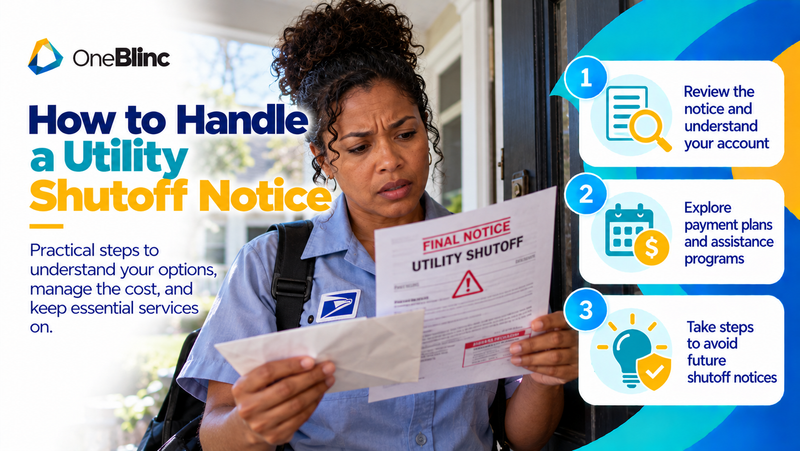
Confirm the balance, shutoff date, contact details, and whether the notice is genuine. Contact the utility through its official website or statement number.
Ask about payment arrangements
Explain what you can realistically pay and when. Request information about extensions, hardship protections, and reconnection fees.
Explore assistance programs
Local community action agencies and government programs may help eligible households. Ask the utility for approved assistance partners.
Document each conversation
Record names, dates, amounts, and confirmation numbers. Keep copies of any written arrangement.
Prioritize safety
If electricity or gas supports necessary medical equipment, notify the provider immediately and ask about applicable medical protections; seek emergency help when needed.
Know your consumer protections
Many states and local regulators have rules that limit when and how utility companies can disconnect service. While details vary by location, common protections include:
Advance notice requirements: utilities typically must notify you before disconnecting service, often in writing and within a set number of days.
Weather-related protections: some areas restrict shutoffs during extreme cold or heat.
Medical certificates: a doctor's note confirming that a household member depends on electricity for medical equipment may delay or prevent disconnection in some states.
Protections for vulnerable households: some areas offer added protections for seniors, people with disabilities, or families with young children.
Your state public utility commission can explain which rules apply to you and how to file a complaint if you believe a utility did not follow them.
Assistance programs to explore
Help may be available even if you have never used assistance before. The Low Income Home Energy Assistance Program, known as LIHEAP, helps eligible households with energy bills and is administered through state and local agencies. Many utilities also run their own hardship funds, discount rates for qualifying customers, or arrearage management programs that forgive part of a past-due balance when you make on-time payments. Local charities, community action agencies, and religious organizations may provide one-time help as well. Apply as soon as possible, since funding can be limited and processing takes time.
What to say when you call the utility
Call as soon as you receive a notice. Explain your situation briefly and honestly, and ask: What is the earliest date service could be disconnected? Can I set up a payment arrangement? Are there assistance programs or discounts I may qualify for? If I make a partial payment today, will that stop the disconnection? Write down the date, the representative's name, and any reference number.
If service has already been shut off
Contact the utility right away to ask what is required to restore service, including any past-due amount, reconnection fees, or deposits. Ask whether assistance programs can help cover reconnection costs, and confirm how long restoration usually takes once payment is made.
Prevent future notices
Once the balance is under control, consider enrolling in budget billing, which spreads costs evenly across the year, and setting up due-date reminders. Paying a little more than the minimum when possible can also create a small credit on your account for months when bills spike.
Watch out for shutoff scams
Scammers sometimes pose as utility representatives and threaten immediate disconnection unless you pay right away, often by gift card, prepaid card, or a payment app. Real utilities typically send written notices in advance and accept standard payment methods. If you receive a threatening call, hang up and contact your utility using the phone number on your bill or official website to confirm your account status.
Related OneBlinc guides
Explore OneBlinc
If a paycheck timing gap is part of your situation, download OneBlinc to explore BlincAdvance™ and check current eligibility and terms. OneBlinc offers a subscription service starting at $8.99 per month, a free standard deposit option, and an optional instant deposit for an additional fee. Available advance amounts depend on eligibility and applicable terms. Only use an advance when you have a clear repayment plan.
Educational content only; not individualized financial, legal, tax, or medical advice. Eligibility rules apply.
Frequently Asked Questions
Will a partial payment stop disconnection?
Not automatically. Get explicit confirmation from the provider.
Can utility companies offer hardship plans?
Many do, but eligibility and terms vary.
Are there seasonal protections against utility shutoffs?
Some states and utilities limit disconnections during extreme weather or certain months. Rules vary by location, so ask your provider or state utility commission.
OneBlinc Editorial Team
The OneBlinc Editorial Team writes practical guides on budgeting, paychecks, saving, and handling financial emergencies. Every article is researched, edited for accuracy, and updated when rules or products change. Our content is educational and is not individualized financial advice.
OneBlinc Blog
OneBlinc helps eligible workers manage paycheck timing with BlincAdvance™. Eligibility and terms apply.
Visit SiteDon't miss an update!
Subscribe to get our fresh news!