How to Get Money Before Payday
Need money before payday? Size the gap, check low-cost options like bill extensions first, and understand advance costs and repayment...

Reviewed by Gil Hackl, Fintech Builder & Operator · October 2026
When a necessary expense arrives before your paycheck, the timing can be more stressful than the expense itself. Before choosing a way to bridge the gap, identify how much you need, when the bill is due, and what the solution will cost.
Start with the exact shortfall
Write down the bill amount, the cash currently available, and your next expected payday. Borrowing more than the gap creates an unnecessary repayment burden. If the expense can be split or postponed without penalties, ask the provider first.
Check low-cost options first
Review available savings, employer payroll options, a bill extension, or a payment plan. A utility company or medical provider may offer flexibility. Compare the total dollar cost of each option rather than focusing only on how quickly you can receive money.
Understand paycheck advances
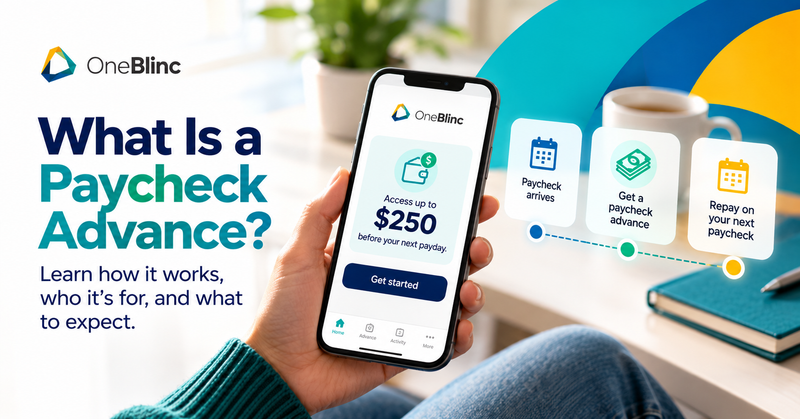
A paycheck advance lets an eligible worker access part of expected earnings before the normal payday. Products differ in eligibility, repayment, subscription costs, and transfer fees. Read the terms and understand when repayment will occur.
Plan for the next paycheck
A $100 advance today can mean $100 less available from the next paycheck, plus any applicable fees. Reserve money for rent, food, transportation, and other essentials before committing to repayment.
Avoid a repeat shortage
After the urgent expense is handled, identify the trigger: a due-date mismatch, irregular hours, or a surprise cost. Moving a due date or saving a small amount per paycheck may help prevent the same situation next month.
A practical example
If a $90 car-related bill is due Tuesday but payday is Friday, first ask whether the merchant can hold payment until Friday. Then compare any advance cost with the consequences of waiting.
Your before-payday checklist
Confirm the exact amount you are short and the date each bill is due.
Ask the biller about an extension or payment plan before borrowing.
Compare the total cost of any advance, including subscription and instant-transfer fees.
Map out how repayment will affect rent, food, and transportation next pay period.
Fast options ranked by cost
When you need money before payday, the options vary widely in cost. Working from lowest cost to highest can help you avoid paying more than necessary.
Use what you already have: savings, cash on hand, or money set aside for a less urgent goal.
Ask for more time: a due date extension or payment plan from the biller often costs little or nothing.
Sell or return items: unused electronics, furniture, or recent purchases you can still return.
Pick up extra hours: an additional shift or a short gig, if available, adds income without borrowing.
Employer or app-based paycheck advance: access to part of your earned pay, often with subscription or transfer fees.
Small-dollar loans: credit unions and some banks offer these with defined terms.
Higher-cost borrowing, like some short-term loans with high fees, should generally be a last resort. Always compare the total dollar cost before deciding.
Avoid these traps
Urgency can make expensive or risky options look appealing. Be cautious of lenders that promise guaranteed approval regardless of circumstances, ask for upfront fees before providing money, or pressure you to decide immediately. Avoid giving out banking passwords or personal information to unverified websites or callers. Legitimate providers explain their terms clearly and let you review them before agreeing.
A two-week bridge plan
Picture a $200 shortfall with payday 10 days away. First, call the provider of the most urgent bill and ask if the due date can move closer to payday. Next, review upcoming spending and postpone anything nonessential, such as a planned purchase or subscription renewal. If a gap still remains, compare the cost of a small advance with any remaining alternatives, and choose the standard deposit if timing allows. Once payday arrives, note what caused the shortfall and set aside even $10 from each future paycheck toward a buffer, so the next gap is smaller or does not happen at all.
Related OneBlinc guides
Explore OneBlinc
If a paycheck timing gap is part of your situation, download OneBlinc to explore BlincAdvance™ and check current eligibility and terms. OneBlinc offers a subscription service starting at $8.99 per month, a free standard deposit option, and an optional instant deposit for an additional fee. Available advance amounts depend on eligibility and applicable terms. Only use an advance when you have a clear repayment plan.
Educational content only; not individualized financial, legal, tax, or medical advice. Eligibility rules apply.
Frequently Asked Questions
Can I get money before payday without a traditional loan?
<p>Possibly. Employer payroll programs, payment extensions, and certain paycheck-advance services are alternatives. Availability and costs vary.<strong></strong><br></p>
Does an advance solve a budget gap?
<p>It can address timing, but it does not increase total income. Include repayment in your next-paycheck plan.<br></p>
How fast can I get money before payday?
<p>It depends on the option. Payment extensions can be arranged the same day, while paycheck-advance services vary by eligibility and whether you choose "standard" or "instant deposit".<br></p>
OneBlinc Editorial Team
The OneBlinc Editorial Team writes practical guides on budgeting, paychecks, saving, and handling financial emergencies. Every article is researched, edited for accuracy, and updated when rules or products change. Our content is educational and is not individualized financial advice.
OneBlinc Blog
OneBlinc helps eligible workers manage paycheck timing with BlincAdvance™. Eligibility and terms apply.
Visit SiteDon't miss an update!
Subscribe to get our fresh news!