How to Build an Emergency Fund
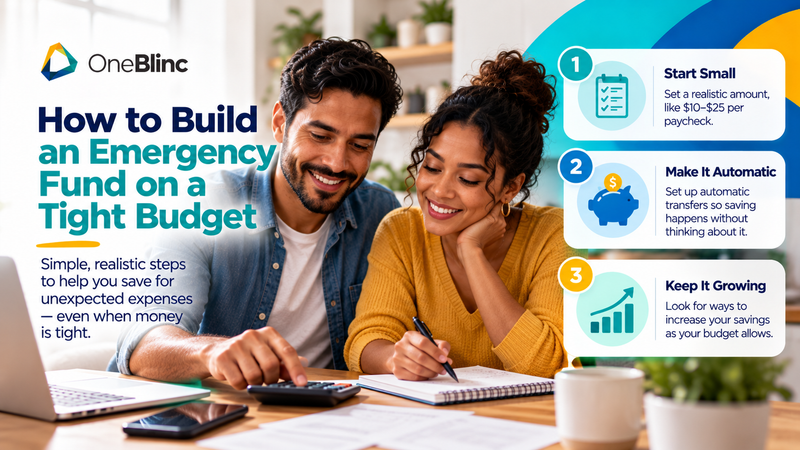
Start an emergency fund on any income: define what counts as an emergency, set a small first goal and automate a contribution each paycheck...
Reviewed by Marco Moreno, Underwriter & Operations Manager · October 2026
An emergency fund creates breathing room when life does not follow the budget. You do not need to save several months of expenses immediately; the first goal is to build a cushion you can actually maintain.
Define what counts as an emergency
Unexpected necessary expenses such as urgent car repairs, medical copays, or a temporary income interruption are different from planned purchases. A clear definition helps protect the fund.
Start with a small first milestone
Choose a target that feels possible, such as $100 or $250, then build toward a larger amount. A first milestone makes progress visible and useful.
Automate a manageable contribution
If your bank supports recurring transfers, move a small amount after each payday. Consistency matters more than an ambitious contribution that leaves your checking account short.
Keep the money accessible
An emergency fund should be reasonably easy to access without putting it at risk in volatile investments. Compare account fees and withdrawal rules before choosing where to save.
Replenish after using it
Using emergency savings for a genuine emergency is what the fund is for. Afterward, restart contributions at a pace your budget can handle.
A practical example
Saving $10 per weekly paycheck creates $520 over a year before any interest, assuming every contribution is made. Even a smaller amount can make the next surprise easier to handle.
Emergency fund starter checklist
Choose a first milestone, such as $100 or $250.
Open or designate a separate savings account for emergencies.
Schedule a small automatic transfer after each payday.
Write down what counts as an emergency so the fund stays protected.
How much is enough? Building in stages
Common advice suggests saving three to six months of essential expenses, but that can feel out of reach when starting from zero. Building in stages makes the goal more manageable.
Stage one: a starter fund of $250 to $500 to cover small surprises like a copay or minor repair.
Stage two: one month of essential expenses, which can help if your hours are cut or a larger bill arrives.
Stage three: three months of essentials, offering more protection during a job change or longer disruption.
Stage four: six months or more, which may make sense for households with variable income or a single earner.
Where to find the money to start
Finding money to save often means redirecting small amounts rather than making dramatic changes. Some ideas include saving a portion of any tax refund, putting aside money from selling unused items, depositing cash-back rewards, or setting aside the amount you would have spent on a canceled subscription. If you receive a raise, consider sending part of the increase straight to savings before you get used to spending it.
Keep the fund separate but accessible
An emergency fund works best when it is easy to reach in a real emergency but not so easy that it gets spent on everyday purchases. A separate savings account at your bank or credit union can provide that balance. Look for accounts with no monthly maintenance fees and check that deposits are insured. Some people keep the account at a different bank from their checking to add a little friction.
What to do after you use it
Using your emergency fund means it did its job. Once the emergency has passed, restart contributions at a pace you can maintain. Review what caused the expense and whether a sinking fund for that type of cost could help in the future.
Micro-saving strategies that add up
When a traditional savings goal feels out of reach, small automatic habits can make progress almost invisible to your daily budget.
Round-up savings: some banks and apps round each debit purchase to the next dollar and move the difference to savings.
Payday micro-transfers: schedule a small fixed transfer, such as $5 or $10, on each payday.
Save the difference: when you choose a cheaper option, like a store brand or skipping a delivery fee, move the amount you saved into your fund.
Cash-back deposits: send credit card rewards or rebates directly to savings.
Found money: deposit unexpected money, like a refund, a rebate check, or cash from selling an item.
A 12-week starter challenge
Some people find it motivating to follow a simple challenge. Save $5 in week one, $6 in week two, and add a dollar each week until week twelve. By the end, you will have saved $126. If that is too much, start with $2 and increase by $1 each week, which adds up to $90. Adjust the amounts to fit your situation, and pause without guilt if an essential expense comes up.
When saving feels impossible
If every dollar is already going to essentials, building savings may need to wait until something changes. That is not a personal failure. In the meantime, focus on reducing one cost, checking eligibility for benefits, or finding a small increase in income. Even a modest change can create the first few dollars of breathing room you need to start.
Related OneBlinc guides
Explore OneBlinc
If a paycheck timing gap is part of your situation, download OneBlinc to explore BlincAdvance™ and check current eligibility and terms. OneBlinc offers a subscription service starting at $8.99 per month, a free standard deposit option, and an optional instant deposit for an additional fee. Available advance amounts depend on eligibility and applicable terms. Only use an advance when you have a clear repayment plan.
Educational content only; not individualized financial, legal, tax, or medical advice. Eligibility rules apply.
Frequently Asked Questions
How much emergency savings do I need?
A starter cushion is a useful first step. Longer-term targets depend on household expenses, income stability, and other support available.
Should I save while paying debt?
The right balance depends on debt costs and your circumstances. Even a small cushion may help avoid new borrowing for minor emergencies.
Should my emergency fund earn interest?
Interest is a bonus, but easy access and safety matter more. Compare insured savings options for fees and withdrawal rules.
OneBlinc Editorial Team
The OneBlinc Editorial Team writes practical guides on budgeting, paychecks, saving, and handling financial emergencies. Every article is researched, edited for accuracy, and updated when rules or products change. Our content is educational and is not individualized financial advice.
OneBlinc Blog
OneBlinc helps eligible workers manage paycheck timing with BlincAdvance™. Eligibility and terms apply.
Visit SiteDon't miss an update!
Subscribe to get our fresh news!