How to Build a Sinking Fund for Annual Expenses
Turn yearly costs like insurance, registration and holidays into small per-paycheck savings, so predictable bills stop feeling like emergencies...
Reviewed by Gil Hackl, Fintech Builder & Operator · October 2026
Annual and occasional bills are predictable even when they do not appear every month. A sinking fund turns those future costs into manageable contributions.
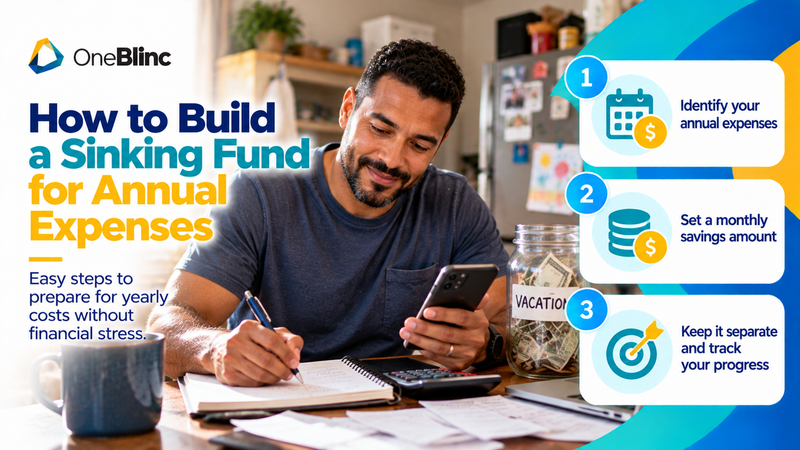
List nonmonthly obligations
Include vehicle registration, insurance renewals, school expenses, gifts, and planned maintenance. Estimate dates and amounts.
Divide each target by pay periods
For a $600 bill due in 10 months, setting aside $60 per month is a starting point. Shorter timelines require larger contributions.
Separate funds from emergency savings
An emergency fund is for surprises; a sinking fund is for known future costs. Labeling each goal helps avoid using one to cover the other.
Automate when affordable
Schedule small transfers after payday, but keep enough in checking for immediate essentials and avoid transfer fees.
Review quarterly
Update estimates when premiums, family needs, or renewal dates change.
Common sinking fund categories
Almost any predictable expense that does not arrive monthly can have its own sinking fund. Here are some of the most common:
Car costs: registration, inspections, tires, oil changes, and insurance premiums paid every six or twelve months.
Holidays and gifts: birthdays, holiday shopping, and celebrations.
Back-to-school: supplies, clothing, fees, and activities.
Home maintenance: repairs, appliance replacement, and seasonal upkeep.
Medical and dental: deductibles, eyeglasses, and regular appointments.
Annual memberships: warehouse clubs, software subscriptions, or professional dues.
Travel: family visits or a planned vacation.
How to calculate your contributions
For each category, estimate the total cost and the number of months until it is due. Divide the cost by the months remaining to get a monthly target. If you are paid biweekly, divide by the number of paychecks instead. For example, $900 in holiday spending planned for December, starting in March, means about $100 per month over nine months, or roughly $46 per biweekly paycheck over about 19 to 20 paychecks.
When the total feels too high
Adding up every category at once can be discouraging. Start with the one or two expenses that have caused the most stress in the past, such as car registration or holiday gifts. Add more categories as your budget allows.
Ways to organize your funds
Some banks let you create multiple savings buckets or sub-accounts with custom names, making it easy to see how much is set aside for each goal. Others prefer a single savings account paired with a spreadsheet that tracks each category's balance. Either approach works as long as you know exactly how much belongs to each purpose.
Why sinking funds reduce stress
Without a sinking fund, a $400 car registration can feel like an emergency, even though it arrives on the same date every year. With one, it becomes a planned expense you are already prepared for. That shift often reduces reliance on credit cards or short-term borrowing for predictable costs and protects your emergency fund for true surprises.
Example: a household's sinking fund plan
Consider a family that expects $360 for car registration in June, $600 for back-to-school costs in August, and $900 for holiday spending in December. Starting in January, they set aside $60 a month for registration, $75 a month for school costs, and $75 a month for the holidays. That is $210 a month in total. When each expense arrives, the money is already waiting, and none of it requires a credit card or a scramble.
What to do with leftover money
If a category ends up costing less than planned, you can roll the extra into the next year's fund for that category, move it to your emergency fund, or redirect it toward another goal. Deciding in advance keeps leftovers from disappearing into everyday spending.
Related OneBlinc guides
Explore OneBlinc
If a paycheck timing gap is part of your situation, download OneBlinc to explore BlincAdvance™ and check current eligibility and terms. OneBlinc offers a subscription service starting at $8.99 per month, a free standard deposit option, and an optional instant deposit for an additional fee. Available advance amounts depend on eligibility and applicable terms. Only use an advance when you have a clear repayment plan.
Educational content only; not individualized financial, legal, tax, or medical advice. Eligibility rules apply.
Frequently Asked Questions
Is a sinking fund the same as an emergency fund?
No. It is for expected expenses with an approximate future date.
What if I start late?
Save what you can, explore installment options, and plan earlier for the next cycle.
How many sinking funds should I have?
Start with one or two for your largest known expenses, then add others as your budget allows.
OneBlinc Editorial Team
The OneBlinc Editorial Team writes practical guides on budgeting, paychecks, saving, and handling financial emergencies. Every article is researched, edited for accuracy, and updated when rules or products change. Our content is educational and is not individualized financial advice.
OneBlinc Blog
OneBlinc helps eligible workers manage paycheck timing with BlincAdvance™. Eligibility and terms apply.
Visit SiteDon't miss an update!
Subscribe to get our fresh news!