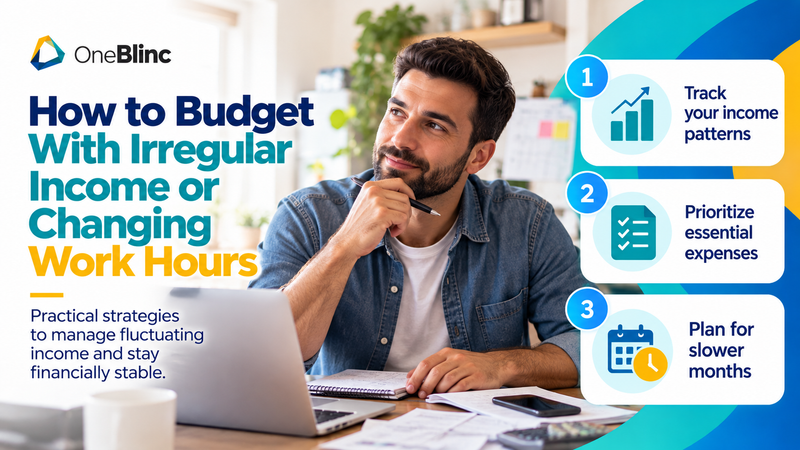
How to Budget With Irregular Income or Changing Work Hours
Budget on variable pay: set a conservative income baseline, cover fixed costs first and hold extra from strong months for leaner ones...
Reviewed by Gil Hackl, Fintech Builder & Operator · October 2026
Variable hours, tips, commissions, and seasonal work can make a fixed monthly budget unreliable. A flexible plan starts with dependable income and protects essentials during slower weeks.
Find a conservative income baseline
Review several months of take-home deposits. Identify a low but realistic month rather than building essential commitments around your highest paycheck.
Separate fixed and flexible expenses
Housing, basic utilities, necessary transportation, and minimum debt payments need a dependable funding plan. Put discretionary purchases in categories you can adjust when income falls.
Use a holding account for strong months
When earnings exceed the baseline, set aside some of the difference to help cover lean periods. Keep that money accessible and separate from discretionary spending where practical.
Create a weekly check-in
Reconcile what actually arrived, what must be paid before the next deposit, and which spending can wait. Adjust rather than treating every variable month as an emergency.
Who deals with irregular income?
Variable pay is more common than many people realize. Restaurant and hospitality workers rely on tips that change with the season. Retail and warehouse employees may see hours shift from week to week. Gig workers, freelancers, and rideshare drivers earn based on demand. Commission-based salespeople, seasonal workers, and those with multiple part-time jobs all face similar challenges. Whatever the source, the core strategy is the same: plan around dependable income, not your best week.
The two-account method
One practical way to smooth out irregular income is to separate earning from spending.
How it works
All income goes into a holding account first. From that account, you pay yourself a consistent amount each week or pay period into your main checking account, based on your conservative income baseline. In strong weeks, the extra stays in the holding account. In slow weeks, the holding account fills the gap. Over time, this creates a more predictable paycheck from unpredictable earnings.
Getting started
It can take a few months to build enough of a cushion in the holding account to make this work smoothly. Start by setting your regular pay amount slightly lower than your typical income so the account can grow.
Prioritize your spending in tiers
Sorting expenses into tiers helps you decide quickly what to cut in a slow month.
Tier one: housing, utilities, food, and transportation to work.
Tier two: minimum debt payments, insurance, and phone service.
Tier three: savings contributions and irregular expenses.
Tier four: dining out, entertainment, and other flexible spending.
When income dips, protect the higher tiers first. When income rises, fund lower tiers in order, starting with savings.
Track trends over time
Keeping a simple record of monthly income for a year can reveal seasonal patterns, such as slower months after the holidays or busier summers. Knowing these patterns helps you save ahead for predictable slow periods.
Example: a server with seasonal tips
Imagine a restaurant server whose take-home pay ranges from $1,900 in slow winter months to $3,200 during the summer tourist season. Building the core budget around $1,900 keeps rent, utilities, and groceries covered all year. During summer, the extra $1,000 or more each month goes into the holding account first, then toward savings and irregular expenses. By the time winter arrives, that cushion can cover any shortfall without stress or new debt. The exact numbers will differ for you, but the principle of saving in strong months to protect lean ones works across many types of variable work.
Choose a tracking system you will actually use
The best tracking tool is the one you keep using. Some people prefer a simple notebook kept in the car or bag. Others use a spreadsheet with columns for date, source, gross amount, expenses, and net income. Budgeting apps can import bank transactions automatically, which saves time but may require sorting deposits by source. Gig platforms often provide earnings summaries, but those may not include your expenses, so add those separately.
A simple weekly log
Date and source: which job, app, or client paid you.
Gross earnings: the total before fees or expenses.
Work costs: fuel, platform fees, supplies, or equipment.
Tax set-aside: the amount reserved for taxes, if you are self-employed.
Net available: what is actually left to spend or save.
Spot patterns and plan around them
After a few months of tracking, patterns often appear. Some workers see income dip at the start of the year and rise in late spring. Delivery drivers may earn more during bad weather or holidays. Freelancers may notice clients pay slowly at the end of the quarter. Once you know your patterns, you can plan ahead by saving more during busy stretches and scheduling larger purchases for months when income tends to be higher.
Do not forget quarterly taxes
Self-employed workers may need to make estimated tax payments during the year. Missing these can lead to penalties. The IRS website explains estimated tax requirements, and a qualified tax professional can help you determine how much to set aside from each payment. Keeping that money in a separate account makes it easier to resist using it for everyday expenses.
Related OneBlinc guides
Explore OneBlinc
If a paycheck timing gap is part of your situation, download OneBlinc to explore BlincAdvance™ and check current eligibility and terms. OneBlinc offers a subscription service starting at $8.99 per month, a free standard deposit option, and an optional instant deposit for an additional fee. Available advance amounts depend on eligibility and applicable terms. Only use an advance when you have a clear repayment plan.
Educational content only; not individualized financial, legal, tax, or medical advice. Eligibility rules apply.
Frequently Asked Questions
How many months of income should I average?
Three to six months can reveal patterns, but seasonal workers may need a full year.
What if my lowest month cannot cover essentials?
Review assistance, payment arrangements, and income opportunities; cutting optional purchases alone may not close a structural gap.
Should I keep a separate account for income smoothing?
It can help. Holding part of a strong month's income in a separate account can make it easier to cover essentials during slower periods.
OneBlinc Editorial Team
The OneBlinc Editorial Team writes practical guides on budgeting, paychecks, saving, and handling financial emergencies. Every article is researched, edited for accuracy, and updated when rules or products change. Our content is educational and is not individualized financial advice.
OneBlinc Blog
OneBlinc helps eligible workers manage paycheck timing with BlincAdvance™. Eligibility and terms apply.
Visit SiteDon't miss an update!
Subscribe to get our fresh news!