How to Avoid Overdraft Fees and Manage Your Checking Account
Avoid overdraft fees by tracking your available balance, timing bill payments, setting low-balance alerts and reviewing your account settings...
Reviewed by Marco Moreno, Underwriter & Operations Manager · October 2026
Overdraft fees can turn a small timing mistake into a larger expense. Understanding your bank’s rules and creating a few account habits may help you avoid surprises.
Know how your bank handles overdrafts
Banks and credit unions have different policies for debit-card purchases, ATM withdrawals, checks, and recurring payments. Review your account agreement and current fee schedule.
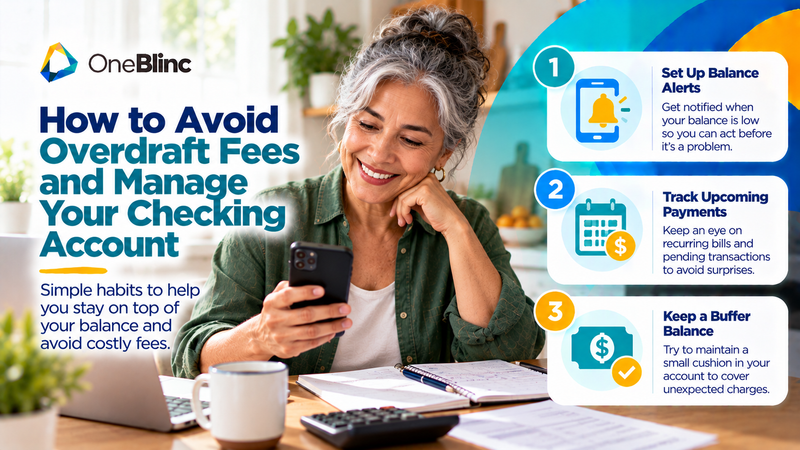
Set low-balance alerts
A notification before your balance gets too low can provide time to transfer money, postpone a purchase, or contact a biller.
Track pending transactions
Your available balance may differ from your posted balance. Gas-station holds, tips, and scheduled payments can affect what is safe to spend.
Review overdraft settings and alternatives
Ask your bank about declining certain transactions, linking an eligible savings account, or other protection options. Each choice has trade-offs and possible fees.
Align bills with income
Moving a recurring due date closer to payday can reduce timing mismatches. Keep a small checking buffer when possible and review automatic payments regularly.
A practical example
If your available balance is $65 and a $60 automatic payment is scheduled tomorrow, an additional $20 purchase today could create a shortfall. An alert and bill calendar make the risk visible.
Overdraft prevention checklist
Set up low-balance alerts in your banking app.
Check your available balance, including pending transactions, before spending.
Review your bank's overdraft settings and current fee schedule.
Align automatic payments with your payday where possible.
How transaction order can surprise you
Many people check their balance, see enough money, and still get an overdraft. One reason is timing. A debit card purchase may post right away, while a check you wrote last week clears days later. Automatic payments can process early in the morning before a deposit becomes available. Some banks also place temporary holds on deposits, so money you see as pending may not be spendable yet. Learning when your direct deposit typically becomes available, and when your recurring payments usually clear, helps you avoid spending money that is already spoken for.
Overdraft protection options compared
Banks offer different ways to handle transactions when your balance runs short. Understanding them helps you choose the setting that fits your habits.
Decline the transaction: the purchase simply does not go through. This may be inconvenient but can avoid fees for some transaction types.
Linked savings transfer: money moves automatically from a connected account. There may be a transfer fee, though it is often lower than an overdraft fee.
Overdraft line of credit: the bank lends you the shortfall, which may involve interest and fees.
Standard overdraft coverage: the bank pays the item and may charge a fee per transaction.
Ask your bank which options apply to debit card purchases, ATM withdrawals, checks, and automatic payments, since rules can differ by transaction type.
If you are already overdrawn
Act quickly. Deposit or transfer funds as soon as possible to stop the balance from triggering additional fees. Pause nonessential automatic payments until the account is back in good standing. Then call your bank and ask whether they can waive or refund a fee, especially if this is a rare occurrence. Finally, look at what caused the overdraft. If it was a timing mismatch, moving a bill due date may prevent it next time. If it reflects an ongoing gap between income and expenses, a fuller budget review may help.
Consider switching accounts
Some banks and credit unions offer accounts with low or no overdraft fees. If fees are a frequent problem, comparing accounts could save meaningful money over a year.
Related OneBlinc guides
Explore OneBlinc
If a paycheck timing gap is part of your situation, download OneBlinc to explore BlincAdvance™ and check current eligibility and terms. OneBlinc offers a subscription service starting at $8.99 per month, a free standard deposit option, and an optional instant deposit for an additional fee. Available advance amounts depend on eligibility and applicable terms. Only use an advance when you have a clear repayment plan.
Educational content only; not individualized financial, legal, tax, or medical advice. Eligibility rules apply.
Frequently Asked Questions
Do all banks charge overdraft fees?
No. Policies vary, and some accounts have eliminated certain overdraft charges. Check the specific institution’s current terms.
Does an overdraft always mean a fee?
Not always. The outcome depends on transaction type, account settings, bank policies, and available protections.
Can I ask my bank to refund an overdraft fee?
You can ask. Some banks consider a courtesy refund, especially for an occasional overdraft, but policies vary.
OneBlinc Editorial Team
The OneBlinc Editorial Team writes practical guides on budgeting, paychecks, saving, and handling financial emergencies. Every article is researched, edited for accuracy, and updated when rules or products change. Our content is educational and is not individualized financial advice.
OneBlinc Blog
OneBlinc helps eligible workers manage paycheck timing with BlincAdvance™. Eligibility and terms apply.
Visit SiteDon't miss an update!
Subscribe to get our fresh news!