Cash Advance Apps vs. Traditional Loans
How cash advance apps and traditional loans differ in cost, repayment, eligibility and credit checks, and how to decide which fits your situation...
Reviewed by Marco Moreno, Underwriter & Operations Manager · October 2026
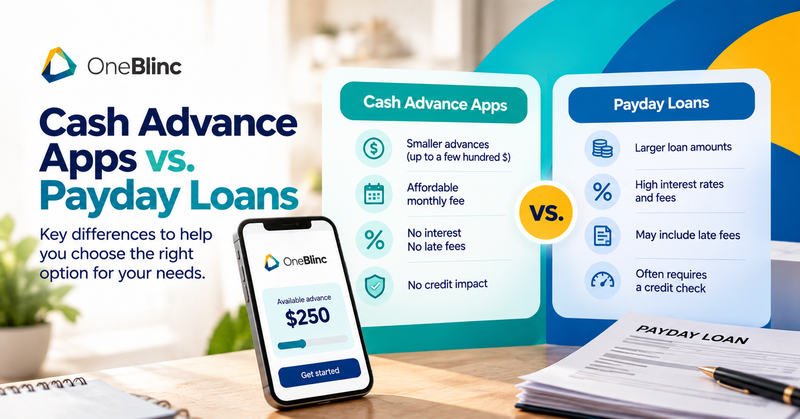
Cash advance apps and traditional loans can both help cover a cash shortfall, but they work differently. The better choice depends on the amount needed, repayment schedule, total costs, and whether the shortfall is temporary or ongoing.
Compare the purpose
An advance app is commonly used for a smaller, near-term need tied to expected income. A traditional personal loan may be structured for a larger expense and repaid in installments. Neither should replace a sustainable budget.
Look beyond the headline fee
Loan costs may include interest and origination fees. Advance services may use subscriptions, transfer fees, or other charges. Calculate the total cost for the exact amount and period you expect to use.
Understand repayment timing
An advance tied to your next paycheck may create a tight budget in the following pay period. A loan spreads payments over time but can carry a longer-term obligation. Match repayment to realistic cash flow.
Consider eligibility and credit
Traditional lenders may review credit information; app requirements vary. Never assume a product involves no credit check or no credit consequences without reviewing its disclosures.
Watch for expensive cycles
Repeatedly using any short-term funding option to cover recurring expenses can make it harder to build a cushion. If the gap happens every month, examine fixed bills, benefits eligibility, and payment plans.
A practical example
For a $120 tire repair, compare the full cost and next-paycheck impact of an advance with the cost of a repair-shop payment plan. For a major repair, a longer-term option might deserve consideration.
Advance app vs. loan checklist
Match the option to the expense: a small timing gap or a larger cost.
Compare the total dollar cost, not just the advertised fee or rate.
Check the repayment structure: next paycheck versus installments over time.
Review the credit-related disclosures for each option before applying.
Other options worth comparing
Cash advance apps and personal loans are not the only choices when money is short. Depending on your situation, other options may cost less or fit your timeline better.
Credit union small-dollar loans: some credit unions offer short-term loans with clear terms for members.
Employer earned wage access: some employers let workers access part of earned pay before payday, sometimes at low or no cost.
Payment plans with the biller: spreading a bill over several months may avoid borrowing altogether.
Credit card: a purchase on an existing card may be manageable if you can pay it off quickly, but cash advances on credit cards often carry higher costs.
Community assistance: local organizations may help with specific needs like rent, utilities, or car repairs.
Questions to ask before you decide
Before choosing an advance app, a loan, or another option, take a few minutes to answer these questions honestly. How much do I actually need, and when? What is the total dollar cost of each option for that amount? When and how will repayment happen, and will it leave enough for essentials? Is this a one-time gap, or does it happen regularly? If you find yourself needing short-term funding every month, the underlying issue may be a budget or income gap that a different approach could address more effectively.
A side-by-side example
Imagine you need $300 for an urgent repair. An advance app might cover part of it within days, with repayment taken from your next paycheck. A personal loan might provide the full amount with monthly installments, but the application may take longer and involve interest. A repair-shop payment plan could split the cost over several months. Comparing total cost, timing, and repayment schedule side by side helps you choose the option that fits both the emergency and your next few paychecks.
Read the fine print
Whichever option you choose, review the terms before agreeing. Look for fees, repayment dates, what happens if a payment fails, and how to cancel any recurring membership.
Related OneBlinc guides
Explore OneBlinc
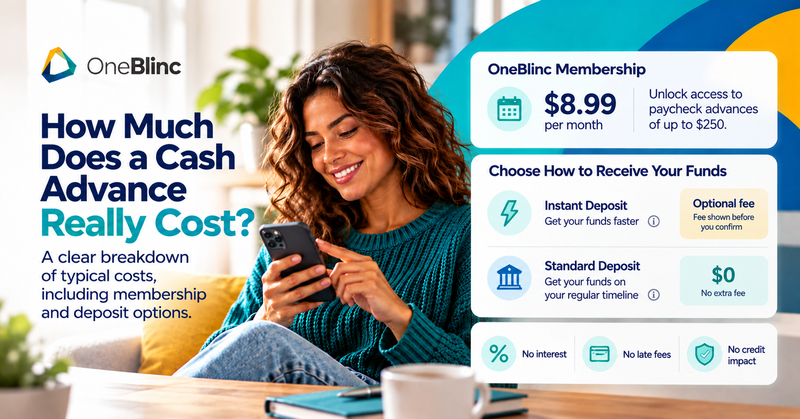
If a paycheck timing gap is part of your situation, download OneBlinc to explore BlincAdvance™ and check current eligibility and terms. OneBlinc offers a subscription service starting at $8.99 per month, a free standard deposit option, and an optional instant deposit for an additional fee. Available advance amounts depend on eligibility and applicable terms. Only use an advance when you have a clear repayment plan.
Educational content only; not individualized financial, legal, tax, or medical advice. Eligibility rules apply.
Frequently Asked Questions
Are cash advance apps always cheaper?
No. Total cost depends on subscriptions, transfer choices, usage frequency, and the alternatives available.
Can a traditional loan be better?
For some larger expenses, predictable installments may fit cash flow better, provided the terms and total borrowing cost are affordable.
Do cash advance apps require a credit check?
Requirements vary by provider. Review each app's disclosures to understand how eligibility is determined.
OneBlinc Editorial Team
The OneBlinc Editorial Team writes practical guides on budgeting, paychecks, saving, and handling financial emergencies. Every article is researched, edited for accuracy, and updated when rules or products change. Our content is educational and is not individualized financial advice.
OneBlinc Blog
OneBlinc helps eligible workers manage paycheck timing with BlincAdvance™. Eligibility and terms apply.
Visit SiteDon't miss an update!
Subscribe to get our fresh news!