Budgeting Tips for Every Paycheck
Budgeting tips built around payday: list bills due before the next check, save for irregular costs, keep a modest buffer and review each payday...
Reviewed by Gil Hackl, Fintech Builder & Operator · October 2026
A budget is easier to maintain when it matches the rhythm of your paychecks. Instead of planning only by calendar month, assign each incoming paycheck a clear job.
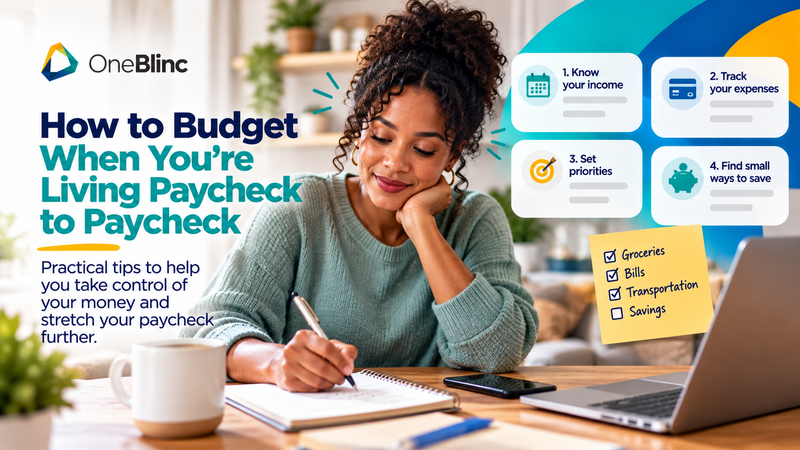
List the bills due before the next paycheck
Start with housing, utilities, transportation, food, and required debt payments. Put due dates beside each amount so you can see which obligations belong to this pay period.
Set aside money for irregular expenses
Car registration, school supplies, gifts, and insurance premiums are predictable even if they are not monthly. Divide the expected cost by the number of paychecks until the bill arrives.
Use realistic grocery and transportation amounts
Check recent receipts and account activity rather than guessing. Small underestimates repeated across several categories can erase your cushion.
Keep a modest buffer
If possible, leave a little money unassigned for minor surprises. Start with an achievable target and build gradually rather than waiting until you can save a large amount.
Review at each payday
A ten-minute payday review can catch changes in hours, bills, and priorities. Adjust the next two weeks without treating a change as a failure.
A practical example
If you receive $1,200 after taxes every two weeks, list the bills due before your next deposit and reserve those amounts first. Then allocate food, transportation, savings, and discretionary spending.
Payday budgeting checklist
Write down your take-home amount and the date of your next deposit.
Assign each bill due before the next paycheck to this deposit.
Set aside a portion for irregular costs like registration or school supplies.
Leave a small buffer and review the plan again on your next payday.
Choose a budgeting method that fits your style
There is no single right way to budget. The best method is one you will actually keep using.
Zero-based budgeting
Every dollar of take-home pay is assigned a job, whether that is a bill, savings, or spending, until nothing is left unassigned. This approach offers a lot of control but requires regular attention.
Envelope or category method
You set a fixed amount for categories like groceries or entertainment. When a category runs out, spending in that area stops until the next paycheck. Some people use physical cash envelopes, while others use digital categories in an app.
Pay-yourself-first approach
Savings come out of each paycheck first, usually through an automatic transfer, and you spend from what remains after bills. This works well for people who prefer simplicity over detailed tracking.
Mistakes that derail a paycheck budget
One common mistake is building a budget around gross income instead of take-home pay. Another is forgetting about expenses that do not appear every month, such as annual subscriptions or car registration. Many people also set grocery and dining targets that are too low, then abandon the budget after a few weeks. Starting with realistic numbers, even if they feel high, makes the plan more likely to last. Small, steady improvements usually work better than an aggressive budget that is impossible to follow.
Make your budget easier to maintain
Pick a consistent time for your payday review, such as the evening your paycheck arrives. Keep your bill calendar in one place, whether that is a phone app, a spreadsheet, or a paper planner. If you share finances with a partner, agree on which expenses need discussion before spending and which do not. Automating bill payments where it is safe to do so can reduce missed due dates, but continue to check your account to make sure everything clears as expected.
Related OneBlinc guides
Explore OneBlinc
If a paycheck timing gap is part of your situation, download OneBlinc to explore BlincAdvance™ and check current eligibility and terms. OneBlinc offers a subscription service starting at $8.99 per month, a free standard deposit option, and an optional instant deposit for an additional fee. Available advance amounts depend on eligibility and applicable terms. Only use an advance when you have a clear repayment plan.
Educational content only; not individualized financial, legal, tax, or medical advice. Eligibility rules apply.
Frequently Asked Questions
Should I budget weekly or monthly?
Use whichever schedule fits your income. A paycheck-by-paycheck plan is especially useful when bill due dates do not align with paydays.
What if my income varies?
Build the essential budget around a conservative income estimate and assign extra income to priorities when it arrives.
What is the easiest budgeting method to start with?
Many people start by listing the bills due before the next paycheck and assigning each one to a specific deposit.
OneBlinc Editorial Team
The OneBlinc Editorial Team writes practical guides on budgeting, paychecks, saving, and handling financial emergencies. Every article is researched, edited for accuracy, and updated when rules or products change. Our content is educational and is not individualized financial advice.
OneBlinc Blog
OneBlinc helps eligible workers manage paycheck timing with BlincAdvance™. Eligibility and terms apply.
Visit SiteDon't miss an update!
Subscribe to get our fresh news!